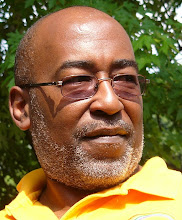
Prof. Stephen Vasciannie has been appointed Principal of Norman Manley Law School, with effect from August 01, 2008. RJR has a news item on this, which I have included in the sidebar of the blog (news articles).
I am immensely proud of Stephen. While there is no doubt as to his qualifications for the job, this talented Jamaican has clearly not allowed the SG debacle to discourage him from finding another way to give service to his country, and indeed his region. Stephen could well have left Jamaica and taken advantage of the multitude of options that are undoubtedly available to him.
One of Stephen's challenges, I am sure, will be to interact with the host Jamaican government. Norman Manley Law School is run by the Council of Legal Education, a regional institution comprising all of the CARICOM countries. It is my fervent hope that malice of the SG debacle does not infect the government's attitude to Stephen in his new role. Another challenge will persuading law students to engage in the practice of law not only as means of making money, but in serving their societies in the cause of justice. Admittedly, I speak from the perspective of a 'cause' lawyer, who has, for the most part, shunned 'conventional' lawyering. Nonetheless, being a minister of justice is the sacred calling of all lawyers, regardless of one is a 'cause' or 'conventional' lawyer. Unfortunately, most of us seem to have forgotten that, given the raft of injustices that generate little if any outrages from the legal profession.
Congratulations Stephen!! And all the very best for a successful tenure. You can be assured of my support in the challenges of leading the Law School in morning of the 21st century.
Monday, July 7, 2008
Congratulations Principal Vasciannie!!


Sunday, June 22, 2008
More on departures from the AG's Department
The Daily Observer of June 18, 2008 and the Sunday Herald of June 22 have both highlighted the resignation of Nicole Foster-Pusey within the context of the spate of resignations from the AG's Department since the AG took office.
In the Observer's story entitled 'Stop the Wild Allegations', the AG laughably denies that any of the resignations have anything to do with her. According to the AG:
"I don't know anything about resignations, speak to the Solicitor General. I don't know anything about tension, I wish the media would stop with these wild allegations and go to source,"; and
"Persons who resigned spoke with him (Solicitor General) and gave their reasons for leaving. I'm seeing names I don't even know. I've never met the people,"
Who does the AG think she is kidding? So how does she explain almost a dozen lawyers leaving the AG's Chambers since her arrival? I also gather that significant numbers of support personnel have also left in the wake of Hurricane Dorothy. How can AG credibly claim not to know about the resignations or the tension (to put it mildly) that has existed between her and the staff? How does she explain the resignation of Patrick Foster before his contract ended? How does she explain the timing of his resignation? Patrick resigned right after his recommendation of Nicole Foster-Pusey as acting Solicitor General was overruled. Is Hurricane Dorothy pretending that she has never assailed the members of AG Department as supporters/sympathizers of the PNP or that doing so is likely to create 'tension'??? What about her throwing some members of her staff under the bus? She was quite happy to call Stephen Vasciannie's name in the Senate when he was completely unable to defend himself regarding the letter of advice on the Trafigura matter. What about Nicole Foster-Pusey and the Dabdoub litigation? Let's talk about wild allegations for a moment. Was it not the AG herself who early in her term openly accused staff lawyers of being PNP supporters/sympathizers?
I know as a fact that the AG has been in meetings with some of those who have now resigned or left. How can she feign ignorance of not knowing these members of staff? Is she claiming, for example, that she doesn't know Nicole Lambert, who recently left a senior position in the Chambers? Apart from being untruthful, the AG seems to think it a point of pride to not know who her staff lawyers are. What a great pretence from one who publicly arrogated the right to intervene in personnel matters that are usually left to the Solicitor General.
In the same Observer report, the new Solicitor General has apparently become the AG's spinmeister. He declined to say how many persons had resigned since the AG took office, but "expressed a difficulty in understanding why she was being held liable for the spate of resignations". Is Douglas for real?? According to Douglas, "The Attorney General has nothing to do with it, why are they calling her? She is the political head!" The SG also denied that the resignations had anything to do with the behaviour of his new boss. In this regard, this is what the AG's new spinmeister had to say:
"Let me put an end to that; I took office in May and I had a meeting with the attorney general and we have agreed for a formula going forward which means the office would operate in much the same way it did when Dr Ken Rattray was Solicitor General. [This means] the attorney general would be responsible for policy and advising government and the technical legal office would advise her on the technical legal implications of whatever policy the government is pursuing.
That's the formula we had, that's the formula I intend to abide by and that's the formula which the attorney general has agreed to,"
Now let's see, Douglas. If the AG had already been observing the division of labour between her office and that of the SG, why was it necessary for you to meet and agree on a 'formula' for going forward?? Is it not implicit in your own words that the AG was not following this formula before, and hence the need to re-establish it? If the AG had been religiously following this formula throughout her reign, do you, Douglas, believe that you would've been appointed SG? Had this formula been applied, do you believe that the AG would've had the audacity to derail the appointment of Stephen Vasciannie and procure the dismissal of the PSC? If the AG had behaved like all her predecessors, do you seriously believe that a dozen people or more would've left the Chambers in under a year? Do you believe that Patrick Foster would've resigned a mere months before his contract was scheduled to end, if the AG had always behaved in accordance with this formula? Why would Patrick give up a gratuity if things were so hunky-dory in the Chambers? Who do you think was responsible for rescinding the appointment of Nicole Foster-Pusey as acting Deputy Solicitor General? Patrick? Give me a break, Douglas, neither you nor the AG have a monopoly on intelligence, so stop playing us all as fools.
Douglas Leys also claims that none of the resignees has cited difficulties with Hurricane Dorothy as a reason for leaving. Now let's examine this. If anybody had in fact mentioned this as a reason to Douglas, would he be disclosing this to the press? I think not. In any event, as Douglas well knows, people often don't cite the real reasons for leaving a job. Further, does anybody really need to cite Hurricane Dorothy as a reason when it's so obvious??? Let's get real. We are talking about an AG who, unlike her predecessors, has publicly asserted the right and the authority to interfere with personnel decisions, and indeed operational decisions that are usually within the purview of the SG.
In its front page article of Sunday Herald of June 22, 2008 entitled Government Backtracks, there is the incredible story of Nicole Foster-Pusey being compelled to recant an undertaking not to seek costs against Abe Dabdoub, following his election litigation against Daryl Vaz. I can't help but reproduce the relevant portions below:
There are more indications that political interference could have triggered last week’s sudden resignation of director of litigation at the Attorney General’s Department, Nicole Foster-Pusey.
Based on documentary evidence, Foster-Pusey was recently directed to rescind a commitment she gave to attorneys who represented Abe Dabdoub in the dual citizen trial, that the AG’s Department would not pursue legal costs against their client as ordered by Chief Justice Zeila McCalla.
The Sunday Herald obtained documents indicating that Foster-Pusey received instructions from her immediate boss, Solicitor General, Douglas Leys, to rescind the commitment.
In a letter dated May 21, 2008, Foster-Pusey had informed Gayle Nelson & Company, attorneys for Dabdoub, that the AG’s Department would not be “pursuing the award of costs outlined in the judgement”.
However, two weeks later, in a letter to the said law firm, dated June 5, Foster-Pusey said: “I am advised that at the time I made these arrangements, I had no instructions from the Solicitor General and the Attorney General.
“The Solicitor General is awaiting instructions from the Attorney General as to how the government would proceed on this issue.” That gave a clear indication that the changed position had emanated from the Attorney General or higher up the political ladder.
On June 12, Gayle Nelson & Company responded, describing Foster-Pusey’s latter correspondence as “astounding”.
“We are therefore entitled, obliged and compelled to rely on any undertaking or assurance given by you in a matter over which you have conduct, and our client intends to so rely, not only on your statements made before the Chief Justice, but also your letter of 21st May,” the law firm stated.
The letter continued: ”We take this opportunity to point out to you that any withdrawal of your position is to be considered a serious breach of ethics, contrary to the cannons of the profession, and which may very well result in a report to the Disciplinary Committee of the General Legal Council by our client.”
Foster-Pusey replied on June 16, stating that: “ I can offer no further clarification, but anticipate that as indicated in the June 5 letter, instructions will be issued by the Solicitor General in due course.”
The former director of litigation made it clear that she acted within her powers.
“I wish to make it clear that at the time I stated my position on the issue of costs, it was my understanding that in my capacity…I had the full power and authority to do so without the need of instructions from either the Solicitor General or the Attorney General.”
Over the years, Foster-Pusey added, “I have made many such directions in my capacity as the attorney with conduct of a matter, team leader in the Chambers,...since 2002 and various periods thereafter.”
So, in summary, Nicole Foster-Pusey has been thrown under the bus but both the AG and the SG, for doing nothing more than her job. As director of litigation, why on earth should she require express instructions not to pursue costs? The Dabdoub v Vaz case was not one in which the government was direct/named party. The government appeared as a friend of the court, as I understand it. This makes it even more bizarre that the AG/SG would now expose Mrs. Foster-Pusey to a disciplinary proceedings before the General Legal Council? It's unconscionable. Under such circumstances, what could Nicole Foster-Pusey do other than to resign?
The spectre of the Vasciannie/PSC imbroglio continues to haunt the AG's Department, however the AG and the SG want to pretend that all is well. The main problem is that the public, and indeed the legal profession simply doesn't care enough about what is happening in the Chambers to speak out and demand better from those who claim to serve the public interest.
Tuesday, June 17, 2008
Nicole Foster-Pusey resigns from A-G's Department
Not surprisingly, Nicole Foster-Pusey is leaving the AG's Department. RJR reported the news today (June 17, 2008). She joins more than half a dozen lawyers who have resigned from the AG's Chambers since Dorothy Lightbourne's arrival as AG in September 2007. In any self-respecting country, this spate of resignations would be a scandal. But clearly not in Jamaica, where there has been little or no outrage at a government intent on eviscerating the AG's Chambers for no motive other than petty personality/partisan politics.
I do hope that some of the lawyers will publicly disclose their reasons for leaving. In the RJR report, Nicole Foster-Pusey declined to comment on the reasons for her departure or the departure of any of her colleagues. This might be 'politically correct' while she is still in the Chambers. However, I do think the public interest demands that the departing lawyers disclose exactly what is going on in the AG's Chambers, and not simply run away.
There had been some idle chatter some months ago about an inquiry by the Office of the PM/Cabinet Office into the operations of the AG's Department. Not surprisingly, there have been no further developments on this. To be candid, I can't see the point of having an inquiry, given the obvious cause of the turmoil at the AG's Department. I can't see how the new Solicitor General, Douglas Leys can operate with any measure of efficiency, given the exodus of so many lawyers, particularly those at the middle and senior levels.
I was speaking today with one of my Jamaican lawyer friends who now resides in Europe. He related to me how a very senior lawyer in Jamaica was bemoaning the state of affairs at the AG's Department. I reminded him that this lawyer was one of the many in Jamaica who failed to speak out when Stephen Vasciannie was strong-armed out of the SG post. I now recall that I had personally emailed this particularly senior lawyer to raise her voice in protest. I never had so much as an acknowledgement.
Despite the chaos at the AG's Department, the Jamaican Bar Association and the Advocates Association of Jamaica remain mute. I suppose this should hardly be surprising, given their track record so far. I continue to be concerned about the complete lack of engagement by the Jamaica Civil Service Asssociation. Except for a few peeps out of Wayne Jones in the initial stages of the Vasciannie imbroglio, the JCSA has been conspicuously silent. It's times like this that I wonder, why should I care, if others don't?
Friday, March 21, 2008
More departures from the AG's Chambers?
Stephen Vasciannie's last day in the AG's Chambers was March 18, 2008. Patrick Foster, as has already been announced, will leave at the end of June 2008. I have now been reliably informed that Nicole Lambert, another senior member of the Chambers is expected to leave in April 2008. At least two or three more resignations are rumoured to be forthcoming.
The AG's partisan campaign of 'shock and awe' is clearly resulting in a 'surge' of resignations and departures, to the detriment of the people of Jamaica. It is no secret that the AG considered that the Chambers had been 'infected' by so-called "PNP" lawyers, and thus, the shock and awe campaign to purge them. Dorothy Lightbourne has diplayed a virulent partisanship that I never suspected was in her. I have known her for many years, and never saw this side to her. Dorothy is fundamentally a weak and insecure lawyer who has no respect for the institutional history of the AG's Chambers, nor for the professionals who staff it. She seems particularly threatened by those who are palpably more competent than she is. So she resorts to tearing them down. She has contrived to have a Public Service Commission that will rubber stamp her whims. Loyalty is her bottom line, not competence. What a tragedy for the the Chambers. What a tragedy for Jamaica.
Wednesday, March 12, 2008
Stephen Vasciannie & Patrick Foster to leave AG's Department
According to media reports, Deputy Solicitors General Patrick Foster and Stephen Vasciannie will be leaving the Atorney General's Chambers. Patrick Foster's resignation was first announced yesterday. His resignation takes effect on June 26, 2008. Stephen Vasciannie leaves at the end of March 2008 when his contract comes to an end. Not surprisingly, the government did not offer to renew Prof. Vasciannie's contract.
Patrick Foster, has been acting as Solicitor General since last year when the government objected to the PSC's recommendation of Stephen Vasciannie as the new Solicitor General. Patrick, together with Douglas Leys were the other two candidates considered for the position at that time. According to an RJR news report today, Patrick is leaving for 'personal reasons'. I suspect that Patrick has just had enough of the political turbulence wrought by the current Attorney General. I can't say I blame him.
The intent of the government, it appears, is to either purge or destroy the AG's Department, all in the name of politics. Jamaica can ill afford to lose the talent and experience of Stephen and Patrick, worse yet at the same time. I fully expect the Department to haemorrhage more talent before long. With the current PSC being beholden to the government, one can expect that the AG will soon have her wish of having loyalists instead of lawyers occupying her Chambers. As has been reported elsewhere, the Dorothy Lightbourne, in her capacity as Minister of Justice has appointed Sherene Golding, the PM's daughter to be her adviser on legislative reform, among other things. Ms Golding has no legal qualifications or experience, save for an undergraduate degree in law from Georgetown University. This is beyond farcical. Jettison Foster & Vasciannie, but elevate the Prime Minister's daughter.
There is a clear agenda on the part of the government to politicize the civil service. I have just received information that another ministry is being positioned to incorporate political loyalists in its civil service ranks. More anon on this.
Wednesday, February 27, 2008
Updated chronology -January 13, 2008 to February 25, 2008
My good friend has again usefully composed an updated chronology,this time from January 13 to February 25, 2008. I very much appreciate the efforts of my friend.
Jan. 13, 2008 The Sunday Gleaner publishes an article by Lambert Brown headed “Justice, Truth and the PSC”, in which Brown points out that neither law nor convention requires Public Service Commission members to resign when the Government changes.
Jan. 13, 2008 The Sunday Gleaner publishes an article by Ian Boyne headed “Vasciannie and our Political Culture”; Boyne argues that “(o)ne of the most reprehensible and repulsive arguments being used against the appointment of Stephen Vasciannie as Solicitor General is the fact that six years ago he harshly criticized Bruce Golding, likening his return to the Jamaica Labour Party (JLP) to a dead cat being tossed on a deck.”
Jan. 15, 2008 The Daily Observer publishes an article by Ken Chaplin under the heading “What’s Going On in the AG’s Dept?” in which he criticizes the Executive Committee of the Attorney General’s Chambers and discusses the question of payments to lawyers in the Chambers for private work.
Jan. 17, 2008 The Gleaner publishes an editorial under the heading “Arrogance, Power and Matters of Justice” concerning mainly the case of Michael Bennett, a caretaker wrongfully dismissed by the St. Elizabeth Parish Council. The editorial comments on the importance of natural justice and states: “…(T)he Michael Bennett cases will, hopefully, inspire a new metaphor for the administration, given its clumsy objection to the installation of Professor Stephen Vasciannie as the Solicitor General and the subsequent firing of the Public Service Commission.”
Jan. 19, 2008 The Daily Observer publishes a letter from O. Hilaire Sobers entitled “The Attorney General, the Constitution and the Rule of Law” which challenges Attorney General Lightbourne’s perspectives on her role in the appointment of personnel in the Attorney General’s Chambers.
Jan. 19, 2008 The Daily Observer publishes a letter from D.S. Morgan entitled “Strange ‘Official’” which points out various discrepancies in Ken Chaplin’s article about the Attorney General’s Chambers published in the Daily Observer on January 15.
Jan. 20, 2008 The Gleaner publishes, as its Letter of the Day, a letter from L.L. Ventour headed “A Daniel Come to Judgement” in which he argues that any objection to Professor Vasciannie’s appointment is not because of Vasciannie’s “dead cat” comments about Bruce Golding’s return to the JLP in 2002.
Jan. 27, 2008 The Public Service Commission re-advertises the post of Solicitor General in the Sunday Gleaner.
Jan. 29, 2008 The Gleaner publishes a front page story headed “PSC Misbehaved: Former Commission Member Sangster Supports Firing Body”. The Gleaner also published front page comments by Cabinet Secretary Carlton Davis on the PSC issue under the title “…Whole Case Handled Poorly, says Davis”. On page 3, the Gleaner reports that “Sacked PSC Members Take Golding to Court”. This report indicates that Daisy Coke, Mike Fennell, Edwin Jones and Pauline Findlay have sought leave to go to the Judicial Review Court to quash the recommendation of the Prime Minister that they be fired for misbehaviour.
Jan. 22, 2008 The Daily Observer publishes a letter from O. Hilaire Sobers headed “Withdraw Partisanship Accusation, Ken”, challenging Ken Chaplin’s suggestion that lawyers in the Attorney General’s Chambers are biased in favour of the People’s National Party.
Jan. 29, 2008 The Daily Observer reports on page 3 that “Four Ex-PSC Members Sue Prime Minister”
Jan. 30, 2008 The Gleaner publishes, as its Letter of the Day, a letter entitled “The primacy of ministers in gov’t administration” by Ken Jones.
Jan. 31, 2008 The Gleaner publishes a letter by O. Hilaire Sobers under the heading “Sangster and the PSC” noting various problems inherent in the approach taken by Dr. Alfred Sangster with respect to the Public Service Commission.
Feb. 2, 2008 The Daily Observer publishes a letter by O. Hilaire Sobers under the heading “Why Now, Dr. Sangster?” criticizing the approach taken by Dr. Sangster. Among other things, Mr. Sobers asks: “(I)f Dr. Sangster felt so strongly about the “misbehaviour” of his colleagues, why didn’t he say so before? Why now, when his erstwhile colleagues have launched a legal challenge to their dismissals. Why didn’t Dr. Sangster resign instead of waiting to be fired?”
Feb. 3, 2008 The Sunday Observer publishes a front page story under the headline: “’PM was Angry’: Golding Accused PSC of Wanting to Shove Vasciannie Down Govt’s Throat, says Coke”. The report draws from the affidavit filed by Daisy Coke, Chairperson of the PSC, on the issue of Professor Vasciannie’s selection for the post of Solicitor General.
Feb. 3, 2008 The Sunday Gleaner publishes, as Letter of the Day, a letter from former Attorney General A.J. Nicholson entitled “Sangster Lets the Puss Out of the Bag” which discusses the reasons advanced by the Prime Minister for dismissing the PSC and points out that Alfred Sangster had admitted that the so-called “dead cat” argument influenced his thinking on whether Professor Vasciannie should be appointed as Solicitor General. Senator Nicholson suggests that this adds to the tangled web that the Government has weaved in the PSC matter.
Feb. 3, 2008 The Sunday Observer publishes on page 3 a story entitled “Gov’t Axes Vasciannie from Air Policy Committee”, noting that Professor Vasciannie has been dismissed from the Air Policy Committee although the letter of dismissal praises the professor for his “tremendous work” which “will be a pillar on which the new committee will be able to build”.
Feb. 5, 2008 The Daily Observer publishes an editorial entitled “Why this Animosity towards Professor Vasciannie?” The editorial suggests there is bias against Vasciannie, notes that the Government has handled the matter poorly, points out that Vasciannie is the candidate best qualified for the post of Solicitor General and links the PSC matter to the dismissal of Vasciannie as Chairman of the Air Policy Committee.
Feb. 5, 2008 The Daily Observer publishes a letter by Alison Irvine under the heading “Is It Personal, Mr. Golding?”, in which Ms. Irvine links the dismissal of Vasciannie from the Air Policy Committee (and his replacement by Noel Hylton) to the PSC matter. Ms. Irvine also points out that in December 2005 the Police Service Commission had sought to retire Inspector Donovan “Hux” O’Connor, but that this decision was found by the High Court to have no legal basis. The Chairman of the Police Service Commission in December 2005 was Noel Hylton.
Feb. 11, 2008 The Gleaner publishes a story under the heading “Stand Up To Them! Permanent Secretaries Urged to be More Forthright Despite Existing Threat of Political Victimisation”.
Feb. 11, 2008 The Daily Observer publishes a letter from Rev. Dr. Mervin Stoddart under the heading “Very Principled Stance, Dr. Sangster”.
Feb. 11, 2008 RJR reports that the closing date for applications for the readvertised post of Solicitor General is February 11, 2008, and that as of Friday, February 8, only Douglas Leys had applied for the position.
Feb. 14, 2008 The Daily Observer publishes a story entitled “Why Hylton, and not Vasciannie, is the Right Man”, concerning the appointment of Noel Hylton to the position of Chairman of the Air Policy Committee of the Jamaican Government.
Feb. 25, 2008 RJR reports that Douglas Leys is the sole candidate for the re-advertised post of Solicitor General; RJR further reports that neither Professor Vasciannie nor Patrick Foster had re-applied for the position.
Feb. 25, 2008 The Gleaner reports, under the heading “DPP, Solicitor General Interviews This Week”, that only one Douglas Leys has applied for the post of Solicitor General.
Friday, February 15, 2008
Further on Prof. Vasciannie's dismissal as chairman of the Air Policy Committee
According to yesterday's Observer (Feb.14, 2008), the Ministry of Transport & Works has defended its decision to replace Prof. Vascianne as chairman of the Air Policy Committee. http://www.jamaicaobserver.com/news/html/20080213T220000-0500_132519_OBS_WHY_HYLTON__AND_NOT_VASCIANNIE__IS_THE_RIGHT_MAN.asp
The Ministry focuses almost entirely on the suitability of Noel Hylton as Prof. Vasciannie's successor, citing Mr. Hylton's supposed credentials in the field of shipping and aviation. My wife Alison had an excellent rebuttal, which was published in the Observer of Feb. 15, 2008. The essential point that Alison raises is that Noel Hylton's credentials were never in issue; what was, and continues to be in issue, is why the government saw fit to replace Prof. Vasciannie at all, considering its own acknowledgement of what he had accomplished as committee chair.
See http://www.jamaicaobserver.com/letters/html/20080214T210000-0500_132545_OBS_MINISTRY_OF_TRANSPORT_MISSES_THE_POINT_ON_VASCIANNIE.asp
Thursday, February 14, 2008
Second and final exchange with Dr. Stoddart
Here is the final instalment of my exchange with Dr. Stoddart.
My first email to Dr. Stoddart of Feb. 13, 2008
Thank you for your reply, Dr. Stoddart. If you have not already done so, I would suggest that you read the affidavit of Daisy Coke, which I believe sets out a clear and compelling chronology of the PSC/Vasciannie saga. The Sunday Observer of February 3 had a lead story based on this affidavit, which has not been so far been publicly denied by Dr. Sangster. For ease of reference, the affidavit can be seen here: http://www.scribd.com/doc/2034515/affidavit-coke-daisy.
While you are more than entitled to defend Dr. Sangster, I do think that it behooves you to do so on the basis of established facts, and not personal affiliation. I note that you have not addressed, much less controverted any of the facts that I adduced in my initial response to you.
Again, I am surprised that you placed the burden of this imbroglio on Prof. Vasciannie's shoulders, when indeed he did nothing more than fairly compete for and win selection for the post of Solicitor General, something which he was entitled to do. I am puzzled by your recommendation that Prof. Vasciannie should have withdrawn and then sought arbitral or judicial recourse. Again, you appear intent on exempting the government from any responsibility for creating this situation in the first place. It is the government that deliberately chose to flout the law, not Prof. Vasciannie. It is the government's flagrant assault on the rule of law that created this mess; not Prof. Vasciannie's 'failure' to withdraw. A Solicitor General is, among other things, expected to stand up for, and uphold the rule of law. As a candidate/selectee for this position, what message do you think Prof. Vasciannie would have been sending if he withdrew in the face of this assault on the rule of law?
Generally, I don't think that Jamaica can afford to squander a talent like Stephen Vasciannie. It seems to me that you have overlooked this dimension in your consideratio of this issue. The government's behaviour (and indeed Dr. Sangster's) is hardly likely to be conducive to attracting young, bright, competent professionals to the public service. Your position implicitly endorses the alienation of talent in favour of placating personality. If your conscience can live with that, so be it. You will definitely have the Jamaica you deserve.
Best regards,
Hilaire Sobers
_____________________________________________________________________________________
Dr. Stoddart's reply (Feb.13, 2008)
Dr. Sobers:
Thanks for the link to Commissioner Coke's affidavit. I read the document thoroughly and it has now concretised my position that Dr. Vasciannie should have withdrawn his name from contention from the very minute that Attorney General Lightbourne objected to working with him.
I have been in similar situations on various sides of a saga of this nature. Whether or not I had much to contribute to the organization, my primary concern was for peace and reconciliation, and I would not insist on placing myself in a messy situation even on a matter fo principle. That matter of principle I would have dealt with but not trying to get the office where other vital people with whom I would have to work did not wish to work with me.
I am now extremely surprised that following the first meeting with the PM none of the PSC members had the common sense to see that if both AG Lightbourne and PM Golding objected to Dr. Vasciannie's appointment then they should have got to work making a different recommendation to the Governor General!!! Preferably starting from scratch and not giving in to the AG's insistence on Leys nor the PM's insistence on Foster. Seek the high road of compromise.
How could a government work well with both the AG and the PM objecting to the Solicitor General's suitability, for whatever reason? The smooth functioning of the government is as important as justice being done for Dr. Vasciannie. When the controversy developed, it was immediately important to seek both (smooth government function and justice for Dr. Vasciannie) in different forums.
The details from Commissioner Coke re the Lackston Robinson matter clearly showed that more efficient rules must be put in place to avoid playing party politics and personality power play with vital government appointments. It also shows that some single person must be given veto power in cases where significant deadlocks occur. Of course, we have the courts but if litigation can be avoided it should be.
I think the GG has veto power in appointing the SG, given what I have read, that the PSC's recommendation is just that, a recommendation. However, I'll leave that to the attorneys.
I could have sat down and commented point by point to the issues that you raised but I chose to make an overall assessment of the situation and now conclude from reading Commissioner Coke's affidavit that Dr. Vasciannie should have stepped in and withdrawn his nomination. Whatever misconduct or other problems existed on the part of the government or the PSC could have been dealt with in less public and more efficient manners. I smelled political "fishiness" in both the SG and Lackston Robinson issues, based on reading Commissioner Coke's affidavit. Thus, more efficient rules must now be put in place to avoid such mess in the future. Now, let the courts decide what is just. God bless.
-M. Stoddart
P. S. I know both Dr. Sangster and attorney Robinson personally and can vouch for their impeccable Christian characters.
_____________________________________________________________________________________
My follow-up to Dr. Stoddart of February 13, 2008
Dr. Stoddart:
Based simply on the affidavit, please tell me how and when Dr. Vasciannie would've known that the AG objected to his selection? I see nothing in the affidavit that indicates that the AG's objection was directly communicated to Dr. Vasciannie. Based on my own inquiries, I understand that the Attorney General had very cordial relations with Dr. Vasciannie up to the time that the PSC recommended his selection as SG. As you are aware, Dr. Vasciannie is a Deputy Solicitor General. Accordingly, I am even more perplexed by your insistence that Dr. Vasciannie should've withdrawn.
Once again, your critique of the PSC's recommendation of Dr. Vasciannie (in the face of objection by the AG/PM) betrays either an ignorance of, or contempt for the rule of law. I have repeatedly stated that the selection of public service officers is constitutionally outside of the remit of politicians. Do you not see the implications of allowing the political directorate to dictate appointments to the public service? If the political directorate is permitted to dictate who should be Solicitor General, why shouldn't they similarly be allowed to dictate selection of judges, police officers, et al? Do you not understand the design of Jamaica's constitution that expressly confers this power on Service Commissions? Following your argument, why not simply abolish these commissions and leave all of these appointments to be made by the political directorate of the day? For a man who applauded Dr. Sangster for his 'principled stance', you appear to be remarkably permissive with respect to the government's palpable failure in this regard. Perhaps, it has eluded you that the erosion of the rule of law is but the first step towards totalitarianism. In essence, this is what you argument boils down to: that the government should be allowed to do as it pleases without reference to the rule of law.
Dr. Stoddart, for your information, the GG has no discretion to veto a recommendation from the PSC or any other Service Commission. This is well established in constitutional/public law. As a matter of law, the GG has no discretion to reject any 'recommendation' or 'advice' that comes to him from any other constitutional functionary. Service Commissions are themselves appointed by the GG on the advice of the Prime Minister after consultation with the Leader of the Opposition. The GG, by law, MUST act on the advice tendered by the PM. There is no question of discretion on the part of the GG in deciding whether to accept the PM's selection of commission members. If you wish to read further on this, I would recommend Caribbean public law scholars like Lloyd Barnett, Albert Fiadjoe, Ralph Carnegie, and Francis Alexis. Areas in which the GG can exercise discretion is very limited, for example, the selection of his Privy Counsellors.
I am not sure how read 'party politics' and 'personality' into the situation of Lackston Robinson, as you suggest. It's really quite simple. Lackston Robinson was retired in the public interest as well as sent on leave. This followed an adverse performance review by the then Solicitor General. The Supreme court held that the decision to retire/send him on leave was wrong. The PSC was at all times entitled to retire Mr. Robinson in the public interest, provided that it did it in accordance with the law. Following the judgment, the PSC did not take this approach, and instead sought to place Mr. Robinson elsewhere in the public service. Mr. Robinson has objected, and followed this up with another round of litigation. That's all there is to it. Interestingly, you appear to ignore the clear play of politics and personality in the government's opposition to Stephen Vasciannie.
With all due respect, Dr. Stoddart, the "Christian" character of Dr. Sangster and Mr. Robinson is completely irrelevant to the issues at hand. Frankly, I don't really care what their religious beliefs are. What I do care about is compliance with the rule of law which protects all of us, regardless of our religious, political or other persuasions.
Best regards,
OHS
_____________________________________________________________________________________
Dr. Stoddart's final response of Feb. 13, 2008
Dr. Sobers:
Many of the questions you raised have been already answered by me or by others whose comments have been published in the press or in the affidavit of Commissioner Coke. The ultimate answers will come from the courts as this matter is litigated and decided.
I admire your passion for the rule of law and I have much confidence in the Jamaican justice system, having worked in it myself. However, in your haste, you often overlook a few obvious points, e.g., the fact that there was obvious political power play and personality clashes in the Dr. Vasciannie v. the AG and the Dr. Vasciannie v. the PM situations, as I analysed them.
There are a few judges and attorneys whom I know personally, including some who once were legal advisors to PM Patterson, to AG Nicholson, to Minister Phillips, et al, upon whom I could call to interpret that matter re the GG's options when "recommendations" have been given to him but this Dr. Vasciannie matter will be decided in the courts and we will all live with the courts' decisions.
Having not yet met him, I can only say that Dr. Vasciannie seems like an honourable man, from all that I have read, and I am sure that he too will do all within his power to see that justice is done. Having known Dr. Sangster and Attorney Robinson for many years, I can vouch for their impeccable Christian characters (more ethics than religion here). I still maintain very strongly that I would have withdrawn my name from recommendation, had I sat where Dr. Vasciannie sat, and then proceeded to seek justice in some other forum. The nation's business must go on and I pray that all three-- smooth government operation, justice for Dr. Vasciannie, and for the dismissed members of the PSC-- will be achieved. I have no doubt that your erudite participation in the public debate will help Jamaica to make corrections where necessary and perhaps avoid such a mess in the future. God bless.
-M. Stoddart
Tuesday, February 12, 2008
Very principled stance, Dr. Sangster- letter to Observer on February 11, 2008 by the Rev. Dr. Mervin Stoddart
The Rev. Dr. Mervin Stoddart paid tribute to Dr. Sangster's 'principled stance' in not joining with his erstwhile colleagues in challenging the PM's decision to fire them. See: http://jamaicaobserver.com/letters/html/20080210t180000-0500_132386_obs_very_principled_stance__dr_sangster.asp
I had an exchange with Dr. Stoddart, which is set out hereunder:
MY EMAIL TO DR. STODDART OF FEBRUARY 11, 2008
Dr. Stoddart,
For a self-described man of the cloth, I find your concept of principled behaviour to be incomprehensible to say the least. In your panegyric to Dr. Sangster in today's Observer, you 'salute' him for his "very gentlemanly and honourable stance concerning the dismissal of PSC members by Prime Minister Bruce Golding". You claim that "Dr Sangster's principled stance in the PSC saga was based on that body's seemingly unjust treatment of attorney Lackston Robinson".
My first question to you would be this: if Dr. Sangster was as principled as you claim, why didn't he express these views earlier? Why now? If didn't he resign, rather than allow himself to be fired with the rest of the PSC members? Why didn't he express these views in any of the meetings that he and his colleagues had with the Prime Minister prior to their dismissal? With respect to the Lackston Robinson issue, why didn't Dr. Sangster protest his dismissal on this ground, given that he was not a member of the PSC that originally made the decision to retire Lackston Robinson in the public interest? Is this your idea of "principled behaviour'?
Apart from your questionable notions of principle, you (and Dr. Sangster) are quite wrong on some of the critical facts. Firstly, there was never any order of reinstatement regarding Lackston Robinson. If you have not seen the judgment of Mr. Justice Jones, I urge you to read it for yourself. Perhaps neither you nor Dr. Sangster understand the import of this judgment, which was simply that the decision of the PSC to retire Lackston Robinson was wrong in law, because of a failure to follow certain legal procedures. What you may not know is that the PSC was more than entitled to repeat the process of retiring Lackston Robinson, provided that it complied with the law in so doing. Instead, the PSC took the advice of the Attorney General's Chambers in seeking to transfer Mr. Robinson to another position in the public service, something that the PSC is in law, authorized to do.
In your praise of Dr. Sangster's 'principled stance', I note that you omitted any reference to Dr. Sangster's preoccupation with a 'dead cat reference' made by Dr. Vasciannie in 2002 with respect to Bruce Golding's return to the JLP. Dr. Sangster himself admits that this concern arose only AFTER he and his colleagues had already signed off on Dr. Vasciannie's selection as Solicitor General. The essen
The essential implication of Dr. Sangster's thinking is that Stephen Vasciannie should have been denied selection as SG, not because of lack of qualifications, but for a public criticism of Bruce Golding made in 2002! A further implication of Dr. Sangster's position is that the PSC should have deferred to some imagined prejudice on the part of the political directorate, in plain violation of the constitution of Jamaica. Now, Dr. Stoddart, does this represent "principled" behaviour? Dr. Sangster claimed, without substantiation, that Dr. Vasciannie's previous commentary could "create strained relations" between Dr. Vasciannie (as SG) and the Prime Minister. Again, is this what you seriously consider as "principled"?
In your world of principle, Stephen Vasciannie ends up being the scapegoat for failing to withdraw himself as a candidate. In my world of principle, Dr. Stoddart:
1. Stephen Vasciannie was lawfully selected to be the next Solicitor General,; there is therefore no rational or legal basis for him to have withdrawn. He like any other Jamaican, is entitled to the protection of the rule of law, something that doesn't appear to matter in your world of principle.
2. This "sordid, unfortunate affair" as you put it, has nothing to do with Dr. Vasciannie's failure to withdraw, but with the government's failure to honour the constitution and the rule of law. The constitution and the rule of law represent the supreme 'principles' in a democracy, which again, do not appear to have a place in your world of principle. It is beyond debate that the PSC was entitled to select the Solicitor General without political interference.
3. Violation of principles have consequences. An immediate consequence is the politicization of the Attorney General's Chambers, something that has never happened in the Jamaica's 45 + years of independence. Anybody selected by the 'new' PSC' to be SG cannot escape being labeled as a 'JLP' functionary, instead of an independent public official. The new PSC itself, cannot avoid this label.
In my world, Dr. Sangster is no Daniel walking choosing to walk into the den of lions. In my world, he is a coward who ran at the first roar.
Best regards,
O. Hilaire Sobers
_____________________________________________________________________________________
DR. STODDART'S RESPONSE OF FEBRUARY 12, 2008
Dear Dr. Sobers:
Thanks for your very well reasoned feedback. Although it was sometimes caustic, I elected to absorb the acidity and focus on your rationale for taking the stance that you so eruditely expressed in your previously published newspaper article and which you explained again to me in your email.
I have read at least 20 articles and listened to other discussions on the PSC issue. I can't remember any comment from Dr. Vasciannie, except maybe a mild reference in some speech to a group. I read Dr. Sangster's published comments and did my own analysis, coming to the conclusions that I expressed in my Observer letter.
You and I take opposing positions re Dr. Sangster's stance, obviously. I have chosen not to write an article and not take a stance on the Vasciannie appointment nor the dismissal of the PSC, except the inferences that could be drawn from my position on Dr. Sangster's stance. I prefer that the courts make their rulings and I privately mused, like Dr. Carlton Davis expressed publicly, that the whole thing was a tragedy that should have been handled differently. I made one suggestion on how it might have been handled differently, namely, Prof. Vasciannie withdrawing his nomination (for the sake of peace). Why would anyone want to assume a post which before it even began was surrounded by mess?
That dead cat story was not very relevant for my opinion on Dr. Sangster's brave stance but whatever might be the reason for the apparent differences between PM Golding and Dr. Vasciannie, I think our country might have been best served if the professor had withdrawn and then taken his protests to arbitration or court or some forum where justice could be considered. So far, however, I have read nor heard nothing to suggest tht Prof. Vasciannie is behind the lawsuit brought by PM Portia and the dismissed PSC members. God bless.
-M. Stoddart
--------------------------------------------------------------------------------
Sunday, February 10, 2008
Commentary on litigation by dismissed PSC members
Somewhat belatedly, I am offering a few comments on the litigation initiated by the dismissed PSC members, with particular reference to Daisy Coke's affidavit. This is the lead affidavit in support of the application for judicial review of the Prime Minister recommendation to dismiss the PSC en bloc.
I will state upfront that I believe the affidavit evidence proffered by Daisy Coke ("DC"). It will be interesting to see what the PM says in response. I simply cannot see the PM being able to craft a credible response to DC's affidavit.
One of the intriguing revelations of DC's affidavit is the PM's expression of confidence in the PSC when he first met with them on September 26, 2007. He was fully briefed on the status of the PSC's work, including arrangements being made to interview applicants for the post of Solicitor General during the first week of October 2007. It is quite clear from the affidavit that the PM did not express any preference for a particular candidate. However, following his Attorney General's objection to Stephen Vasciannie's selection, the PM later summoned the PSC to a meeting on October 31, 2007 to rage at them for attempting "to shove Dr. Vasciannie down his throat and to mash up the Government”.
The PM clearly made no attempt to give the PSC members a fair hearing before dismissing them for so-called "misbehaviour". The PSC members first learned of the particulars of this "misbehaviour" when the Gleaner published excerpts of a letter by the PM to the Leader of the Opposition dated November 16, 2007. In a meeting with DC on November 16, 2007, the PM did not provide particulars of misbehaviour; instead he told DC that he had already issued a letter “to terminate the PSC en bloc”. It was during this conversation that the PM asked DC whether the PSC's decision to recommend Stephen Vasciannie had been vitiated by (a) having John Leiba and Carlton Davis on the interviewing panel; and (b) the non-recusal of Pauline Findlay, given that she and Michael Hylton have a child together.
Is the PM kidding? Didn't someone advise him that the PSC is authorized by law to have non-Commissioners assist in the processing of applicants? Why would he throw his own Cabinet Secretary 'under the bus', so to speak? Wouldn't the Cabinet Secretary not have briefed him beforehand of his role and function with respect to the PSC??
With respect to Pauline Findlay, I didn't think that Prime Minister Golding would have stooped so low to raise her relationship with Michael Hylton. No surprisingly, DC's response was "I was so astonished by this statement from the Hon. Prime Minister which I regarded as entirely improper, that I was unable to utter a response". Interestingly, Pauline Findlay states in her affidavit that she recused herself when the PSC was considering Michael Hylton for the position of Solicitor General back in 2000. This was certainly the proper thing to do at the time. There was no basis for her to do this again in considering applicants that did not include Michael Hylton. The PM has charged that she should have recused herself because she was aware of a 'less than harmonious relationship' between Hylton and Leys. What rot!
According to DC's affidavit, Dorothy Lightbourne, the Attorney General called her on October 18, 2007, to object to Stephen Vasciannie's selection as SG. As has been well publicised, the AG objected to Stephen Vasciannie because of a purported lack of litigation experience. The AG told DC that her preference was Douglas Leys. As far as I am concerned, the AG trespassed on the province of the PSC by expressly objecting to the PSC's choice. Nevertheless, DC bent over backwards to negotiate with the AG, even meeting with the AG at her Chambers on October 24, 2007. The AG refused to budge from her position, despite DC pointing out to her that the PSC had had the input of the then incumbent SG on the qualifications for the job. I really have to ask, what does Dorothy Lightbourne know about running the Attorney General's Chambers that would be superior to Michael Hylton's knowledge and experience? Dorothy Lightbourne has spent most, if not all of her professional life as a sole practitioner, with no track record of managing lawyers, at all. By contrast Michael Hylton was a partner at Myers Fletcher & Gordon for more than a decade before he became Solicitor General in January 2001. It seems that Dorothy is out of depth, but doesn't know it, even less so, her Prime Minister.
Apart from violating the rule of law, the government's behaviour has been singularly vile with respect to its treatment of the PSC members. The only hope of redress lies with the Jamaican courts. Let's hope they do their job.
Friday, February 8, 2008
One application for post of Solicitor General -RJR -Feb.08, 2008
RJR confirms that the only applicant so far for the post of Solicitor General is Douglas Leys. One working day remains for applications to be submitted. RJR also reports that neither Patrick Foster nor Stephen Vasciannie have re-applied for the post.
http://www.radiojamaica.com/content/view/5359/26/
Thursday, February 7, 2008
Commentary on SG advertisement
So far, I gather that the "new" Public Service Commission has received only one application from Douglas Leys in response to its advertisement for applicants for the post of Solicitor General. I can imagine that Amb.Rainford, et al must be scratching their heads wondering why no other contenders have presented themselves. Doesn't take a Ph.D. in astrophysics to figure out why there isn't a flood of applications piling up on Amb. Rainford's desk.
The advertisement represents a shameful repudiation of the rule of law. A lawful recommendation for the post was already made by the Coke-PSC, which remains unaffected in law, by the subsequent dismissal of that PSC in December 2007. On what legal basis can this pseudo-PSC pretend that this recommendation was never made? What legal basis can the Governor General refuse to act on the recommendation of the Coke-PSC, but then act on the recommendation of the pseudo-PSC on the same subject matter?
In my view, Stephen Vasciannie would definitely have a cause of action against the pseudo-PSC for its failure to acknowledge, much less respect his selection as Solicitor General. At the very least, I could see a case for some sort of injunction against the pseudo-PSC, restraining it from embarking on a new (and in my view, illegal) exercise to recruit and select a Solicitor General.
Despite the pending litigation to challenge the dismissal of the Coke-PSC, this pseudo-PSC has contemptibly set April 01, 2008 as the date for the new SG to take office. This reinforces the intent of the government to have its way, regardless of the outcome of court proceedings or the rule of law itself.
After all the song and dance about Stephen Vasciannie's so-called lack of litigation experience, the advertisement does NOT identify litigation experience as the principal qualification for the post of Solicitor General, or indeed at all! Appearing in major court matters is only mentioned as one of SEVEN of the core duties of the Solicitor General!
A good friend sent me an amusing response to the Solicitor General advertisement issued by the "new" Public Service Commission.
"Dear Sir/Madam,
One considers it appropriate to bring this advertisement to your
attention. One's understanding is that there has been some controversy
attendant upon earlier attempts to fill this position, but one verily
hopes that this will not deter candidates. One is obliged to note that
the core duties associated with the post include a considerable range of
matters, and that contrary to what may have been circulated hither and
thither the candidate's degree of seasoning in the field of litigation
is a factor, but not the only one, to be considered by the Public
Service Commission. At this juncture, one also considers it significant
to mention that the aforementioned Public Service Commission may or may
not retain its current composition as of the date when applications are
received. Some writers maintain that rules of the Constitution apply to
this position, but one wishes not to opine on this issue.
Yours faithfully,
"One"
Tuesday, February 5, 2008
Is it personal, Mr. Golding? By Alison Irvine- Observer- Feb.05, 2008
Today's Observer also features a pointed critique by my wife Alison Irvine of Prof. Vasciannie's removal as chair of the Air Policy Committee. Alison exposes the folly of replacing Prof. Vasciannie, who not only has the qualifications for the job, but whom the government has recognized as having performed creditably during his tenure.
Alison points to the Attorney General's endorsement of Stephen Vasciannie's credentials in international law/international relations at the same time that she was objecting to his selection as SG, because of a purported lack of litigation experience. Certainly, Stephen Vasciannie cannot be disqualified from chairing the Air Policy Committee because of any lack of expertise in international law/relations as regards the formulation of Air Policy.
Noel Hylton, Alison points out, is chair of the Police Service Commission. Like the Public Service Commission, the Police Service Commission was sued for retiring a person in the public interest. The Police Service Commission retired a police inspector in the public interest, but the Supreme Court quashed the decision as unlawful for failure to observe natural justice. Alison rightly questions why the Police Service Commission was not subject to the same treatment as the Public Service Commission, following a similar adverse judicial review (in respect to Lackston Robinson).
The bankrupt order of Jamaican politics continues, despite Mr. Golding's promise of something new and different.
http://activepaper.olivesoftware.com/Repository/ml.asp?Ref=Sk1PLzIwMDgvMDIvMDUjQXIwMDkwMA==&Mode=Gif&Locale=english-skin-custom
Why this animosity towards Professor Vasciannie? - Observer editorial - Feb.05, 2008
The Observer has an excellent editorial today (February 05, 2008) on the issue of Prof. Vasciannie's removal from the chairmanship of the Air Policy Committee. See:
http://activepaper.olivesoftware.com/Repository/ml.asp?Ref=Sk1PLzIwMDgvMDIvMDUjQXIwMDkwMA==&Mode=Gif&Locale=english-skin-custom
The Observer juxtaposes Prof. Vasciannie's removal with the government's opposition to his appointment as Solicitor General. The Observer notes that this behaviour on the part of the government is evidence of animosity toward Prof. Vasciannie and indeed what "appears to be the genesis of a campaign to deny him the opportunity to serve his country". Well said Observer!
Sunday, February 3, 2008
Letter of the day - Sangster lets the puss out the bag- Sunday Gleaner, Feb.03, 2008
Former Attorney General and Opposition spokesman on justice, Senator A.J. Nicholson, QC, has a letter in today's Sunday Gleaner commenting on Dr. Sangster's public support of the PM's dismissal of the PSC. http://www.jamaica-gleaner.com/gleaner/20080203/letters/letters1.html.
One of the critical points addressed by Senator Nicholson is Dr. Sangster's claim that he (Dr. Sangster) made "three attempts to have the PSC members review the recommendation but he was not successful in having it withdrawn". Sangster did this because he believed that "the utterances of Professor Vasciannie could undermine the potential relationship between the office of the solicitor general and the prime minister".
Senator Nicholson pointedly asks: "Who told him so?" I agree with Senator Nicholson that it "certainly could not be an unprovoked assumption on his part", and that the "prime minister has never publicly given this as a reason for his actions." Senator Nicholson asked this question in the context of the express reasons given by the PM for dismissing the PSC. The issue of interpersonal compatibility with Prof. Vasciannie was certainly not one of these reasons. Indeed, Daisy Coke's affidavit (reported on in the Sunday Observer of Feb 03, 2008) expressly states that the PM had no personal difficulty with Prof. Vasciannie.
A.J.'s view of Dr. Sangster, that he has 'let the puss out of the bag', is perhaps the most charitable thing that can be said about Sangster. For me, Sangster has not really let the puss out of the bag, so much as he has simply reconfirmed what was already quite clear: that Bruce Golding's dismissal of the PSC was prompted by arbitrary considerations, and not by the rule of law.
Gov't axes Vasciannie from Air Policy Committee- Sunday Observer, Feb 03, 2008
The Sunday Observer has also published a story on the removal of Prof. Stephen Vasciannie as chairman of the Air Policy Committee. There appears no rhyme or reason for replacing Stephen Vasciannie, an expert in international law/relations, with Noel Hylton, a septuagenarian, who has no similar experties. This action by the government, combined with the derailment of Prof. Vasciannie's selection as Solicitor General is indicative of a sinister agenda to undermine or discriminate against Prof. Vasciannie, regardless of the competence he brings to either position.
In November 2007, the Attorney General had objected to Prof. Vasciannie's selection as SG because of a purported lack of litigation experience. This objection cannot validly be invoked with respect to Prof. Vasciannie's chairmanship of the Air Policy Committee, given Prof. Vasciannie's undisputed credentials in the area of international law/relations.
This development further confirms the government's agenda of arbitrary governance, despite the lofty promises of 'inclusiveness' made by the Prime Minister at his inauguration.
See the Observer story at: http://activepaper.olivesoftware.com/Repository/ml.asp?Ref=Sk1PLzIwMDgvMDIvMDMjQXIwMDMwMg==&Mode=Gif&Locale=english-skin-custom
Saturday, February 2, 2008
Why now Dr. Sangster?
The Observer has also published my letter on Alfred Sangster and the
PSC:http://www.jamaicaobserver.com/letters/html/20080201T190000-0500_132065_OBS_WHY_NOW__DR_SANGSTER_.asp
Thursday, January 31, 2008
My letter appearing in today's Gleaner- "Sangster and the PSC"
Today, the Gleaner published my critique of Alfred Sangster's public condemnation of his erstwhile colleagues and his support of the PM dismissal of the PSC. Here is the link:
http://www.jamaica-gleaner.com/gleaner/20080131/letters/letters2.html
Wednesday, January 30, 2008
The Cobb Family Lecture-The Human Rights Project in Jamaica- by Prof. Stephen Vasciannie
On January 24, 2008, Professor Stephen Vasciannie delivered the Cobb Family Lecture entitled The Human Rights Project in Jamaica. With the kind permission of Prof. Vasciannie, the text of his lecture is reproduced here. Please respect Prof. Vasciannie's copyright!
The Cobb Family Lecture
The Human Rights Project in Jamaica
Chairman, Ambassadors Cobb and LaGrange Johnson, Members of the American Friends of Jamaica, Public Defender, Specially Invited Guests, Distinguished Ladies and Gentlemen:
I am grateful for the opportunity to give this lecture today. Ambassador Cobb: this lecture is a tribute to you and to the important work you did while you served as the United States ambassador to Jamaica. As has been said, you were a frank, hard-working and successful ambassador here. You have been a friend of the University, and I remember, for instance, that you were instrumental in arranging of the seminar in honour of Ralph Bunche in collaboration with the Department of Government at Mona. I also recall that a number of lecturers in the Department of Government participated in various activities with the American Government during your period of stewardship, particularly in respect of hemispheric security questions. Ambassador Johnson has continued the tradition of good relations between the United States Government and the University; the good relations are evident from Ambassador Johnson’s presence here today. I would also like to thank Dr. Gossell Williams for the determination and organization skills that she has put into the Cobb Lecture.
My presentation is about human rights. From the outset, I wish to acknowledge, with gratitude, the persons who have contributed significantly to the human rights project in Jamaica. For many years, the Independent Jamaican Council for Human Rights, under the leadership of Dr. Lloyd Barnett and with persons such as Dennis Daley and Nancy Anderson, has done sterling work in the field. Similarly, Hilaire Sobers and Mrs. Yvonne McCalla Sobers have made major contributions, and remind us in various ways that if the State abuses your rights today, they will abuse mine tomorrow. They all remind us too that human rights principles must be available to all without fear or favour.
What is the state of human rights in Jamaica today? Naturally, the responses to this question will vary from person to person. What is striking, though, is the deep chasm that appears to exist between the perspectives of the optimists and pessimists on this question. The optimists are inclined to argue that Jamaica, for all challenges, has made considerable progress in the area of human rights. For them, the country has a constitutional system that enshrines fundamental rights and freedoms; these rights and freedoms are respected in large measure by the State; the State does not willfully seek to violate individual rights; and where breaches of human rights are perpetrated, the State and its institutions try to effect remedies in the interests of victims.
In contrast, the pessimist is apt to argue that the constitution does not do enough to ensure human rights, and that, in any event, even the stated constitutional safeguards are given only limited effect in practice. Sometimes it seems that the human rights debate is not over whether the glass is half-full or half-empty: it is more about whether the glass exists any at all.
The gap between how the State views its performance in the area of human rights on the one hand, and how Jamaican citizens rate the State, on the other, has not been fully explored in the literature pertaining to Caribbean law and politics. It is, however, a point that will be familiar to most denizens of the Region, and certainly of Jamaica. Various Ministers of Justice in Jamaica have made State of the Nation Addresses and other pronouncements confirming the State’s commitment to human rights, and have, as a matter of policy, insisted that the Jamaican Government should respond officially to the Inter-American Commission on Human Rights, the United Nations Human Rights Committee and other bodies on all issues pertaining to the promotion and protection of human rights in Jamaica.
In short, they have accepted that Jamaica should adhere to the rule of law. But the gap is evident, for, notwithstanding official pronouncements and responses, the people of Jamaica also know about the situation in the street: “de runnings” as we are inclined to call them. And on the street, the perception is frequently that the most basic human right – the right to life – can be taken with impunity by some members of the security forces. So, objectively speaking, the State is challenged: it wants one thing, and offers the rhetoric in support of that goal. But, for reasons that will be canvassed below, some of the State’s agents want something different, and armed with guns, these agents are prepared to violate the law, to take life unlawfully.
Against this background, questions concerning human rights are of considerable interest in Jamaica. In this presentation, I wish to consider the main factors that influence the perception and the reality concerning human rights in the country. My intention is to provide some ways of thinking about human rights issues in the country: you know much of the text, but I will offer some elements of context. I will do this by looking at a series of propositions about human rights law and practice.
(1) The Constitution does not deliver on its promise.
The Jamaican Constitution provides an important foundation for the promotion and protection of human rights in the country. Chapter III of the Constitution – on fundamental rights and freedoms -- sets out a substantial list of civil and political rights. These rights are expressly said to trump any legislation or other State action, so that if the Government passes a law that is in conflict with any one of the fundamental rights and freedoms, that law will be null and void to the extent that it conflicts with Chapter III. This foundation is important not only because it provides State agents with advance notice as to how far they may go in seeking to curtail individual rights, but also because it represents a statement by the society as to what we recognize as our most significant values. Subject to certain qualifications, the main human rights so recognized in the Jamaican Constitution are as follows:
(a) The right to life;
(b) The right to liberty;
(c) Freedom of movement;
(d) Protection from inhuman treatment;
(e) Property rights;
(f) Protection for privacy of home and other property;
(g) The protection of law;
(h) Freedom of conscience;
(i) Freedom of expression;
(j) Freedom of assembly and association;
(k) Protection of discrimination on grounds of race, , place of origin, political opinions, colour or creed.
This list therefore serves as the starting-point for our understanding of human rights in Jamaica, and to that extent, it must be recognized as key to the promotion and protection of rights. Indeed, given that it incorporates most, if not all, of the civil and political rights recognized in Western societies, it may be regarded as a promising foundation.
On closer examination, however, the provisions of Chapter III of the Constitution, are subject to noteworthy criticisms from a rights perspective. To begin with, Chapter III is formulated in terms of “lawyers’ law”. Thus, some of its provisions are not easy to understand, and in several places the basic human rights are subject to qualifications that require careful analysis.
To take one example, we all share the view that everyone is entitled to liberty, and in practice, we are inclined to view incursions into that right as violations on the part of the State. But the Constitution takes a detailed approach to the question of liberty; so, after stating the basic principle, it goes on to enumerate at least eleven circumstances in which personal liberty may be restricted. These include, among others: unfitness to plead a criminal charge, the execution of a court sentence for a crime, imprisonment for contempt of court, detention before trial, detention on suspicion of having committed a crime, detention of minors for the purpose of education or welfare, detention to prevent the spread of an infectious or contagious disease, detention for the care or treatment of persons of unsound mind, addicted to drugs or alcohol, or vagrants, and detention to prevent unlawful entry or to ensure expulsion or extradition.
Now, on the face of things, most of these restrictions are reasonable in the sense that they help to preserve the interests of both individuals and the State; however, when all these qualifications are juxtaposed immediately against the principle that “no person shall be deprived of his personal liberty”, one may wonder about just how much of the principle is left.
In some cases, too, the rights provisions in Chapter III of the Constitution are limited by general language that cuts down the capacity of the provisions to promote and protect the cause of individual freedom. To be more specific, the Constitution guarantees freedom of movement, the right to privacy of home and property, freedom of conscience, freedom of expression and freedom of assembly and association; the relevant provisions give the impression, then, that each of these rights is of great social value, to be limited only on an exceptional basis. But, in fact, each of these rights is curtailed by general language to the effect that the rights may be trumped by any law “which is reasonably required in the interests of defence, public safety, public order, public morality or public health.” This proviso means that as long as the State may reasonably argue that it has to limit basic human rights for reasons of defence and so on, the rights may be reduced to nothing. There is an understandable logic to this approach, for with respect to defence, public safety, public order and public health, the founding fathers of the Constitution could reasonably have decided to attach greater significance to collective rights than to the human rights of the individual person.
Even so, however, the approach taken to collective rights is vulnerable to criticism in at least two respects. First, because the exceptions are so general, the State is arguably given too much latitude: in effect, the only limit on the State here is that the restrictions are “reasonably required”. For some, this requirement is quite vague and it allows the State to take action that may only be challenged ex post facto. There, therefore, is no clear attempt in the Constitution to emphasize that restrictions on freedoms such as movement, conscience, expression and assembly are fetters to individual liberty, to be treated as highly exceptional.
Second, the exception for “public morality” may be open to particular criticism. Clearly, in some cases private and public morality may differ; and if this is the case, what is the underlying principle by which it is ordained that public morality must always prevail as a matter of law? The jurisprudence of human rights in some other jurisdictions has tended to attach increasing significance to private morality, largely on the basis that if what you do does not harm other persons – relying on Mill and Hart – then the law has no place in restricting your behaviour.
Without expressing a final view on whether private morality should necessarily trump public morality, it seems to me that the Jamaican Constitution has turned the issue on its head: it suggests that public morality, as determined by the State, may always trump freedom of expression, freedom of conscience, and the right to privacy, as long as this is believed to be reasonably required. In short, the Constitution limits the scope for debate about how far moral concerns should enter our assessment of laws by allowing the State to defend restrictions on human rights on the ground that the rights are inconsistent with the inherently vague concept of public morality. Suppose, for example, a man adheres to religious practices that hurt no one, but which may be contrary to the majority, Christian traditions in the country: should the State be able to prohibit these practices on the basis that prohibition is reasonably required to preserve public morality? Freedom of conscience suggests one answer, the public morality exception suggests another.
The Constitution, though starting with the premise that we all have fundamental rights and freedoms, does not fully live up to the rhetorical promise that these rights are supreme. The rights are asserted, but then they are hedged in by numerous exceptions. Some of these exceptions are necessary for the maintenance of good order and to balance the rights of the individual against the wider society. If, however, you expect a constitution to be a strong endorsement of the basic, core rights that individuals possess in your society -- the social contract between the person and the State – then the Jamaican Constitution does not play a particularly strong role.
(2) Human rights safeguards in the Constitution are undermined by savings clauses.
In a fundamental sense, the savings clauses in the Constitution serve to whittle away several human rights safeguards that the Constitution itself appears to grant. With respect to the rights in Chapter III, the most directly relevant savings clause is found in Section 26(8) of the Constitution. Section 26(8) reads as follows:
“Nothing contained in any law immediately before (the date of independence) shall be held to be inconsistent with any of the provisions of this Chapter; and nothing done under the authority of any such law shall be held to be done in contravention of any of these provisions.”
In summary form, this clause ensures that no law which was valid before the date of independence from Britain can be struck down as unconstitutional, or contrary to basic human rights law in Jamaica: pre-independence rules are sacrosanct, pre-independence human rights norms are preserved. This type of savings clause was probably adopted in the Jamaican Constitution (and in a number of other Caribbean Constitutions) as an administrative convenience to avoid uncertainty as to basic rights and freedoms with the coming of independence; and it may well have been assumed by the British authorities that that no pre-independence law was incompatible with basic human rights norms in any event. Given, however, that human rights standards can and do evolve with the passage of time, and that perceptions of human rights sometimes change to suit new social and philosophical approaches, it is undesirable to freeze human rights law in Jamaica in the terms of Section 26(8).
As presently structured, therefore, the savings clause provisions incorporate a deeply conservative approach to human rights law in Jamaica. If the British authorities or the Jamaican legislature restricted a certain human right before independence, then that restriction is still valid in 2008. The conservatism inherent in this approach may be readily demonstrated with reference to the question of flogging and whipping. The United Nations Convention on Torture, Cruel and Inhuman Treatment prohibits these forms of punishment. And yet, in a region that should reject flogging and whipping as part of the unwanted legacy of slavery, flogging and whipping may still be constitutional because they have been “saved”, either by Section 26(8) or by another savings provision pertaining to forms of punishment set out in Section 17(2) which states in essence that punishment that was not regarded as inhuman or degrading before independence retains this status in the post-independence period.
For example, in R v. Errol Pryce, a case from 1994, the Jamaican Court of Appeal upheld a sentence of whipping. Carey P (Ag.), writing for the court noted, among other things, that because the Crime (Prevention of) Act sanctioning whipping was in force before independence, it was preserved by Section 26(8). To be sure, in a more recent case, R v. Noel Samuda (1996), the Court of Appeal refused to uphold a sentence of whipping primarily on the basis that the statutory provisions in the instant case (the Crime (Emergency Provisions) Act of 1943), and subsequent provisions passed by reference thereto) were not actually in effect in Jamaica at the time the sentence was imposed. Significantly, though, in R v. Noel Samuda, a majority of the judges, Bingham J.A. and Harrison J.A. expressed views suggesting that the savings clauses in Sections 17(2) and 26(8) could be used to uphold flogging and whipping if these sentences validly existed before independence. In other words, the savings clause approach may still work to preserve flogging and whipping as long as it can be shown that these forms of punishment are sanctioned by existing legislation that predates independence.
This situation has prompted unequivocal criticism from the United Nations Human Rights Committee, as for instance, in the case of Errol Pryce:
“The Committee notes that the author was sentenced to 6 strokes of the tamarind switch and recalls its jurisprudence, that, irrespective of the nature of the crime that is to be punished, however brutal it may be, corporal punishment constitutes cruel, inhuman and degrading treatment or punishment contrary to Article 7 of the Covenant.” (paragraph 6.2).
The savings clause approach law has also played a role in ganja debate in this country. In August 2001, the Chevannes Commission on Marijuana recommended that ganja should be decriminalized when used in premises not accessible to the public. The Commission built its argument partly on the premise that marijuana use is such an integral part of Jamaica culture that there was little point in trying to maintain criminal sanctions against persons possessing small quantities of the drug. Some of you may know that I have resisted the main recommendations of the Chevannes Commission for a variety of reasons, and I continue to do so. The point for consideration here, however, concerns the fact that the Jamaican courts are, in effect, discouraged from reaching a decision on whether marijuana use amounts in some circumstances to the exercise of freedom of conscience or religion, and therefore supported by the Constitution. Various points may be made in this debate, including points about the weight to be given to freedom of religion versus other social values and concerns that ganja use may have serious negative effects on the wider community. But, this debate is not likely to receive full consideration in the courts because of the savings clause. Specifically, because the Dangerous Drugs Act precedes independence, the Jamaican Constitutional Court held in DPP v. Forsythe that the savings clause works to preserve the legislation from constitutional challenge on human rights grounds. The court relied on other grounds for upholding the Dangerous Drugs Act, including the notion that the Act is “reasonably required” to protect public health; it is fair to suggest, however, that but for the savings clause, there would have been a more extensive judicial consideration of the role of human rights principles in the marijuana debate.
Two further aspects of the savings clause approach may be highlighted here. Particularly in the early years after independence, judges in Jamaica were rarely called upon to assess the constitutionality of Acts of Parliament on human rights grounds; for, at that time, most laws were by definition pre-independence rules. Thus, it is arguable that there did not develop, with any great force, a jurisprudential tradition in laws are questioned in light of human rights norms. This is in contrast with, for example, the situation which was addressed by the South African Supreme Court in the first year following black liberation: in that case, S v Makwanyane, the South African Supreme Court was called upon to consider the constitutionality of the death penalty from first principles.
The very nature of the case, and the fact that there was no short-cut, conservative solution via a savings clause, has helped to affirm the importance of human rights analysis in South African jurisprudence from the outset. In the case of Jamaica, the situation is changing, and one notes in passing that, recently, in the case concerning the Portmore Toll Road and in the Trevor Forbes Case, concerning extradition, novel but ultimately unsuccessful arguments based on the human rights listed in Chapter III of the Constitution, were presented to the Judicial Committee of the Privy Council.
Secondly, it is to be remembered that the savings clause does not work to save laws that have been passed since independence. In the case of Lambert Watson v. The Attorney General of Jamaica, the Judicial Committee of the Privy Council held that the mandatory death penalty, as contemplated by Jamaica, was not preserved by the country’s savings clause because the law setting out the mandatory death penalty – the Offences Against the Person Act – had been amended following independence. For their Lordships, the savings clause is to be read restrictively, and amendments to pre-independence laws bring the entire pre-independence law within the purview of the courts. From a human rights standpoint this approach has value, for it limits the cases in which the savings clause will be applicable to laws that have remained untouched since 1962, a category which will diminish in size with the passage of time.
But, the Lambert Watson decision also highlights the paradox of pre-independence savings clauses. In this case, the relevant provisions of the law were amenable to constitutional review by the Privy Council only because the law had been amended in 1992. A law passed by the Colonial Power or by the Jamaican legislature before independence would, in effect, have greater binding force than one passed by the legislature of independent Jamaica. Nor is this a theoretical proposition. On the same day that the Privy Council delivered its judgment striking down Jamaica’s death penalty law, a law which had been intended to restrict the instances in which the death penalty was applicable, the same court upheld mandatory death penalty laws for Trinidad and Tobago and Barbados. The laws in the latter two countries applied the death penalty to a larger category of murders than the Jamaican law; those laws were held to be valid by a majority of the Privy Council essentially on the basis of the savings clause.
Overall, therefore, the promise of the Constitution, already limited by several restrictions in respect of particular rights, is further restricted by the existence of savings clauses. As a given society evolves, judges may well wish to consider whether human rights standards also change. Indeed, we are familiar with vibrant debates concerning the United States Supreme Court about whether judges, in interpreting a constitution, should apply the text and originalist conceptions of that text or whether they should assuming that the Constitution is a living document and thus eschew the so-called strict constructionism.
In the case of Jamaica, however, we are required to assume that pre-independence laws are always virtuous until the legislature indicates otherwise in new legislation. This undermines judicial creativity and places a premium on the past. It also helps to explain why for some areas of the law the basic human rights set out in Chapter III of the Constitution remain largely irrelevant.
(3) Some human rights rules in the Constitution need to be amended.
The question of constitutional reform has, with varying degrees of enthusiasm, been on the public agenda in Jamaica for at least thirty years. With respect to human rights issues, the draft Charter of Rights, which seeks to amend Chapter III of the Constitution in various ways, has come close to the port, but it is yet to arrive home. The draft Charter of Rights contemplates a number of important changes, and in some respects, demonstrates certain weaknesses in current human rights rules.
This is true, for example, in matters concerning discrimination on the basis of sex. Specifically, Section 24 of the Jamaican Constitution indicates that no law shall make any provision which is discriminatory; and discrimination is defined as placing persons at a disadvantage for reasons attributable wholly or mainly to their race, place of origin, political opinions, colour or creed.
It seems, therefore, that in some contexts it may still be possible to discriminate against women (or as is less likely, against men) simply on the basis of gender. Admittedly, this possibility is reduced by certain considerations. For one thing, there is actually some ambivalence in the terms of the Constitution. Although Section 24 rather pointedly fails to prohibit gender discrimination, another provision, Section 13 indicates that every person in Jamaica is entitled to fundamental rights and freedoms, regardless of race, place of origin, political opinions, colour, creed or sex.
The provision in Section 13 could ensure that as regards fundamental rights there can be no gender discrimination; but, Section 13 is preambular in its formulation, and there is a view to the effect that it does not actually create any rights and duties. Another factor that may reduce the possibility of State-supported gender discrimination arises from legislation. In the field of employment, Section 3(1) of the Employment (Equal Pay for Men and Women) Act indicates that no employer shall discriminate between male and female employees by failing to pay equal pay for equal work. There has been, of course, considerable debate on whether the requirement of equal pay for equal work actually ensures gender equality in matters of pay, and it may well be that a more appropriate standard would be equal pay for work of equal value, but it is fair to suggest that the Jamaican legislation acknowledges the principle of gender equality in this area.
Clearly, though, the Constitution needs to be amended to incorporate an unequivocal provision on gender equality. On this issue, Jamaican perspectives have certainly evolved since the time of the founding fathers, and if Jamaican society is to make progress and regard itself as fair and just, we cannot retain the implication of inequality in the legal document that reflects our highest aspirations and core values. This is one of the issues on which various sectors of Jamaican society appear to be in agreement.
In 1993, the Jamaican Constitutional Commission “unanimously and unhesitatingly” recommended that the word “sex” should be expressly included in the non-discrimination provision in Section 24 of the Constitution. There should be some degree of embarrassment in the fact that this is still to be done 15 years later. It hardly needs emphasis that if one half of the population is not firmly acknowledged as equal in the Constitution, some people will not take the Constitution seriously.
(4) The level of police killings suggests that, in some matters, agents of the State are prepared to disregard basic human rights.
The most basic human right is the right to life. The State has a duty not only to promote the security and safety of its citizenry, it must also ensure that its agents attach the highest significance to the right to life.
From a constitutional and legislative standpoint, the right to life may appear to be somewhat adequately safeguarded in Jamaica. This conclusion, however, would obviously be a deeply misleading representation of the overall picture concerning the right to life in the country; for, in practice, in Jamaica, the right to life is scarcely respected. Nor is this a recent phenomenon. Official statistics indicate that for the decade 1991 to 2000, 7,965 people were murdered in Jamaica, so that for each year about 796 people were killed on average. For the same period, agents of the State in the form of the police killed 1,389 persons (an average of about 139 persons per year), while 89 police were killed by civilians (an average of almost 9 per year). I have referred to the figures for an entire decade to demonstrate the pattern of murder, and to reconfirm, if reconfirmation is needed, that the question of murder constitutes a long-term, structural problem for Jamaican society.
Jamaica society is sharply divided on the question of police killings. On one side, many will argue that police killings amount to fundamental breaches of the right to life, with such killings being perpetrated as part of deliberate schemes for the destruction of persons perceived by State agents as criminal elements. In support of this viewpoint, the strikingly high level of police killings, the disproportion between police killings and the number of police killed by civilians and the fact that the level of police killings has been at a high level for over three decades, all suggest that the present situation is not accidental. So, for example, from September 1986, Americas Watch argued that both statistical patterns and individual cases suggest that the Jamaican police “seek out” crime suspects and “summarily execute them.” It is also suggested that some members of the security forces are prepared to take advantage of the high crime rate to kill civilians in the pursuit of political and terrorist agendas, private motives or to satisfy sadistic tendencies and other psychological problems.
In January 2008, Former Prime Minister Edward Seaga, referring to a raid by the security forces in which five people were killed, put the matter in these terms:
“In the absence of acceptable answers to the public (on specific questions posed), the conclusion could be drawn that there exists in the Jamaica Constabulary Force killer police who are irretrievably steeped in the deadly practice of state terrorism.”
On this side of the argument, local human rights groups have become increasingly vocal, and in some instances, have sponsored petitions to the Inter-American Commission on Human Rights against the Jamaican State.
On the other side, State authorities in Jamaica have never acknowledged the existence of a policy of deliberate police killings, and have often argued in support of the rule of law. On occasion, some State officials have made statements that could be interpreted as supporting police murder, but some of these statements may also be read as affirmations of the right of self-defence for the police. Even so, however, the level of killings is high, and there is the perception among many that, given the level of criminality in the society, it is entirely understandable that the police should fight back. The wider societal view may well be that callous murderers should not be allowed to act with impunity, and that, in the present legal environment in which the death penalty has not recently been enforced, police killings are necessary to ensure justice with respect to known murderers.
Professor Don Robotham appears to accept it as given that the wider society is in favour of police killings that are not in self-defence; in the Gleaner of January 20, 2008, he wrote:
“Jamaican society cannot be asking security officers to take life with a wink and a nod, and then when they do exactly what we are demanding, throw our hands up in horror and turn around and berate them.”
Robotham also suggests that the security forces “must be heartily tired of the unbearable hypocrisy” of Jamaican society in respect of police killings, and argues that we need to put in place a “rights-governed framework” in which a special segment of the Jamaican judiciary will sit in judgment on security force operations such as that which took place in Tivoli Gardens in January 2008. As part of this scheme, Robotham would also change the rules of engagement so that security agents of the State could use force other than in circumstances of self-defence:
“The challenge is how to specify the situations in which lethal state violence is permissible, and to elaborate and operationalise an effective legal framework to regulate such situations. Let me be crystal clear here: I am referring to the right of the security forces to use lethal force in situations which do not meet the current legal standards of self-defence.”
In this debate, which concerns how security forces should operate in a high crime environment, the better view is that that State should be committed to respect for the right to life. Notwithstanding Robotham’s argument, the security forces should remember that they ought not to take life save in circumstances of self-defence. Whenever the police or soldiers take life for reasons other than self-defence, this not only violates the human rights of the victim, it also reinforces the notion that State agents are prepared to disregard human rights concepts, very often with impunity.
(5) There are other instances in which the State has not fulfilled its human rights obligations.
The issue concerning police killings provides the most visible reminder that in some instances the State has not fulfilled its basic human rights obligations to the people of Jamaica. But there are other examples of this problem. One of these concerns the treatment of persons who are incarcerated within the Jamaican prison system.
In the post-independence period, the Jamaican State has not accorded high priority to the construction and maintenance of prisons, other correctional facilities and detention centres. And, as a result, in many instances conditions at such facilities fall considerably short of elementary conditions for humanity: overcrowding at some facilities is both extreme in magnitude and enduring in character, some buildings are dilapidated, sewerage systems are often inadequate, and generally conditions are simply deplorable.
In these circumstances, it is difficult to argue that Section 17 of the Jamaican Constitution – which prohibits inhuman and degrading treatment or punishment -- is being respected. Of course there is the view that we need not be unduly worried about prison conditions, for, if prisons are too commodious, this may actually promote criminal activity. In reality, Jamaica is nowhere near this particular tipping point: in several prisons, we fall well short of the minimum standards in both law and morality. Against this background, the charge that the State is insensitive to some human rights standards is easily made.
(6) Questions concerning the death penalty have cast a long shadow over the human rights environment in Jamaica.
Of all the human rights questions facing Jamaica, the death penalty raises the most difficult and controversial issues in practice. The response of the international community to Jamaica, and more generally the Commonwealth Caribbean, on this issue has placed us in an invidious position. At times, the death penalty question dominates news about human rights developments in Jamaica, and the impression is engendered that some Jamaican authorities arbitrarily wish to carry out death sentences, influenced by fright, fear and social prejudice. This caricature does not do justice to the complex issues that have attended the death penalty debate both here and elsewhere in the Caribbean.
Both local and international opponents of the death penalty sometimes argue that the retention of the death penalty in Jamaica is inconsistent with International Law. Various European Governments take this position, as do non-governmental organizations such as Amnesty International and the much-respected Independent Jamaica Council for Human Rights. To support their position, these entities note various developments including the fact that the United Nations Human Rights Committee in its First General Comment on Article 6 of the International Covenant on Civil and Political Rights maintained that some aspects of Article 6 “strongly suggest that abolition is desirable.”
By the same token, critics of the Jamaican position on the death penalty point out that the former United Nations Commission on Human Rights had repeatedly passed resolutions calling on States to abolish the death sentence, and emphasize that an increasing number of countries has, in fact, prohibited the sentence in practice. The decision not to incorporate the death penalty among the possible sentences available to the International Criminal Court and other international criminal tribunals has also been mentioned as evidence as to the appropriate way to handle this issue in human rights law.
Jamaica has therefore increasingly been called upon to defend its position in favour of the death penalty. In October 2007, the Government of Jamaica set out some of its arguments in a vote at the United Nations on the subject. For Jamaica, the death penalty is not prohibited in International Law. The governing rule of International Law is set out in Article 6 of the International Covenant on Civil and Political Rights. This provision indicates that everyone has the right to life, and no one may arbitrarily be deprived of this right: given that the death penalty is judicially sanctioned in each case, it cannot reasonably be described as arbitrary. Other provisions of Article 6 have also been raised by Jamaica. So, for instance, Jamaica maintains that Article 6(2) clearly contemplates the possibility of the death penalty in some cases; it reads:
“In countries which have not abolished the death penalty, sentence of death may be imposed only for the most serious crimes in accordance with the law in force at the time of the commission of the crime and not contrary to the present Covenant and to the Convention on the Prevention and Punishment of the Crime of Genocide. This penalty can only be carried out pursuant to a final judgment rendered by a competent court.”
Likewise, Jamaica has argued that where Article 6(5) prohibits the imposition of the death penalty on persons below 18 years of age or on pregnant women, this is taken as convincing evidence that Article 6 does not bar the death penalty for persons falling outside the protected categories. Again, the assertion in Article 6(6) that nothing in Article 6 shall be invoked to delay or prevent abolition of the death penalty is itself presented as confirmation that Article 6 does not itself prohibit the death penalty.
Jamaica has also responded to the specific claims made by European countries outside the context of Article 6. For Jamaica, all the legal arguments raised by death penalty critics actually presuppose the lawfulness of the death penalty. So, for instance, where the United Nations Human Rights Committee indicates that abolition is desirable, this is taken as an acknowledgement that International Law will need to be changed if abolition is to become a requirement of the law. Jamaica has also argued that those treaties that expressly prohibit the death penalty, including the Second Optional Protocol to the International Covenant on Civil and Political Rights and the Protocol to the American Convention on Human Rights to Abolish the Death Penalty have not been widely accepted, and more importantly, have not been accepted as law by Jamaica.
From a positivist standpoint, Jamaica is correct. There is no binding rule of International Law that requires the abolition of the death penalty in all circumstances. At the same time, however, it may be that Jamaica has been heavily legalistic about an issue that has several moral and political undertones. Because of these undertones, there has been a steady flow of criticism of the general human rights record in Jamaica, when in fact the central point of tension has actually been the death penalty. In other words, because Jamaica has remained at least nominally in the retentionist camp on death penalty questions, the country may be the subject of more severe criticism about its human rights record than is warranted by the situation in the country. That is part the long shadow of the death penalty in Jamaica.
Another part of the shadow concerns the well-known line of Privy Council cases that includes Pratt and Morgan v. The Attorney General of Jamaica and Neville Lewis v. The Attorney General of Jamaica. In the former case, the Privy Council held that where, in capital cases, the time between the sentence of death and execution exceeds five years, “there will be strong grounds for believing that the delay was such as to constitute inhumane or degrading punishment or other treatment.” The Privy Council also found that where there was inhumane or degrading punishment or other treatment, contrary to Section 17 of the Constitution, the sentence of death should be commuted to life imprisonment.
One result of this decision was that it placed pressure on the State to ensure that all appellate procedures before the courts are completed in five years. In 1997, the Jamaican Government, when faced with the five-year time period, withdrew the country from the First Optional Protocol to the International Covenant on Civil and Political Rights as a means of expediting death penalty cases. This act prompted considerable criticism from lawyers and human rights activists. Jamaica had withdrawn from a multilateral human rights treaty, and in so doing, had placed itself in a small category of countries to have taken this step; the country had also removed itself from having the benefit of advice from the United Nations Human Rights Committee on a range of human rights questions, including, but not limited to, the death penalty. Again, arising from the death penalty question, Jamaica was represented being significantly against human rights.
The Neville Lewis Case has also had an important bearing on death penalty adjudication in Jamaica. To begin with, in this case the Privy Council appears to have converted the five-year presumption in Pratt and Morgan into an enforceable rule to the effect that once five years have elapsed between sentencing and execution, the death penalty is automatically to be commuted to life imprisonment. Also, in Neville Lewis their Lordships indicated that the State could not effectively place an upper limit on the time within which international human rights bodies could hear petitions in death penalty cases. Thus, if the Inter-American Commission were to take two years to respond to an individual petition, according to the Neville Lewis decision this would simply mean that the convicted person would stand a greater chance of having his sentence commuted than if the Commission were to take nine months to respond.
The upshot is that the Privy Council has created the opportunity for the Inter-American Commission to decide, in effect, who lives and who dies in Jamaican death penalty cases. In this regard, it should be recalled that in the Pratt and Morgan Case the Privy Council had estimated that it would take approximately nine months for petitions to be heard by each international human rights body.
A presentation by the previous Attorney General of Jamaica, A.J. Nicholson Q.C., indicated that of 18 cases involving the full procedure before the Inter-American Commission between 1994 and 2004, none took nine months or less, the shortest period was one year, and the longest was 3 years 5 ½ months. Seven cases took more than 2 years. This suggests that it may be somewhat difficult for Jamaica to carry out the death penalty unless ways are found to expedite the procedures of the Inter-American Commission. It has also been argued that some of the delay in death penalty petitions before the Commission has been prompted by tardiness on the part of the Jamaican Government; if this is the case, then the Government too will need to expedite its procedures in order to meet the five-year time limit. Notice, though, the wider point: in trying to accelerate the pace of the Commission’s work, and in trying to place time limits on the Commission, Jamaica was vulnerable to the charge that it wished to influence the decision-making procedures of an independent human rights body, not the kind of accusation that Jamaica could have welcomed.
(7) Advocates often invoke International Law as decisive in their human rights debates.
As is evident from aspects of the foregoing discussion, human rights rules normally apply at both domestic and international levels. In the case of Jamaica, most assessments of the human rights situation are undertaken with reference to domestic law, not least because individuals exercise their rights and undertake duties primarily with reference to Jamaican law.
Significantly, however, several Jamaican law rules overlap with human rights rules set out in treaties such as the International Covenant on Civil and Political Rights, the International Covenant on Economic, Social and Cultural Rights and the American Convention on Human Rights. This overlap should come as no surprise: as a matter of history, post-World War II human rights rules owe their origin mainly to the Universal Declaration on Human Rights of 1948.
This declaration, a resolution of the General Assembly of the United Nations, set the stage for the formulation of binding treaties such as the European Convention on Human Rights, and the ICCPR and the ICESCR, which were both open for ratification in 1966. Jamaica became independent in the period following the Universal Declaration and the European Convention on Human Rights, and it is clear that in preparing the Jamaican Constitution, the founding fathers relied heavily on the European Convention in identifying the human rights to be treated as fundamental. They incorporated, in particular, the civil and political rights in the European Convention as part of Jamaica’s domestic law.
In a sense, this significant overlap between Jamaican human rights rules and the International Law rules, as set out, for instance, in the European Convention and the ICCPR, has helped the Jamaica State to argue that the country is in the mainstream of international human rights law. But this overlap also carries other implications. One is that advocates in human rights cases are often inclined to cite international human rights developments to support their contentions on various points. This approach has its virtues; among other things, it should prompt us all to remain abreast of changes in International Law, and helps to reinforce the notion that at least some human rights norms are universally applicable. But, the tendency to rely on international human rights law may also carry certain pitfalls, and so, it may be appropriate to sound a warning that international human rights rules need to be applied with circumspection in the Jamaican context.
For a start, it is important to remember that the several economic and social rights set out in the ICESCR do not have the same binding character as civil and political rights. This is so because the ICESCR itself does not contemplate that that all its rules will have binding effect. This treaty lists rights such as the right to education, the right to physical and mental health, the right to work, leisure and the right to an adequate standard of living. Of course, these are important social objectives, and each State should be encouraged to ensure that they are satisfied.
It is difficult to argue, however, that these are objectives are always regarded in all societies as rights that are enforceable in court. The cost of securing these objectives may well be beyond the means of the typical developing country, and conceptually some people argue that human rights properly understood should be limited to acts of restraint by the State, that is, to civil and political rights. In any event, the ICESCR recognizes that some of the rights set out therein may not be immediately enforceable; thus Article 2(1) provides as follows:
“Each State Party to the present Covenant undertakes to take steps, individually and through international assistances and co-operation, especially economic and technical, to the maximum of its available resources, with a view to achieving progressively the full realization of the rights recognized in the present Covenant by all appropriate means, including particularly the adoption of legislative measures.”
In short, the ICESCR leaves it to each country to determine the extent to which it will satisfy the objectives in that treaty: the fulfillment of these objectives is subject to the country’s available resources. This is not to suggest, for instances, that the right to education is unimportant; it is only to indicate that the extent to which a country fulfills this right is largely to be determined by that country. This point is sometimes not fully appreciated by those who argue that International Law ensures a right to tertiary education in all countries.
In some instances, persons invoke International Law as decisive in human rights matters when, in fact, International Law speaks with ambivalence. Consider the difficult moral, legal and philosophical question of abortion. The Abortion Policy Review Advisory Group in Jamaica has formulated certain recommendations that, no doubt, will be the subject of considerable debate in society. To what extent does international human rights law govern the question of abortion? To date, both advocates and opponents of abortion rights have invoked international treaties to support their divergent perspectives. In some respects both sides are correct, which is another way of saying that international law does not speak decisively on the subject.
More specifically, the ICCPR enshrines the right to life, but it does not indicate the point at which life begins. At one point in the negotiations on the ICCPR, in 1957, five countries (Belgium, Brazil, El Salvador, Mexico and Morocco) proposed language to the effect that “from the moment of conception” the right to life “shall be protected by law”. This proposal was expressly opposed by some States and when the matter was put to a vote, the proposal was rejected by 31 to 20, with 17 abstentions. Thus, the ICCPR does not expressly incorporate what some may characterize as a “pro-life” perspective; and given that the pro-life approach was considered and rejected, one could conclude that the ICCPR does not support that approach. On the other hand, as Shirley Richards of the Lawyers Christian Fellowhip reminded us recently, the American Convention on Human Rights, to which Jamaica is a party, takes a different approach. Article 4(1) of the latter convention states that:
“Every person has the right to have his life respected. This right shall be protected by law and, in general, from the moment of conception. No one shall be arbitrarily deprived of his life.”
This provision embraces the view that life begins at conception, and therefore serves, at least as a starting-point for the pro-life perspective in abortion matters. If, therefore, Jamaica were to contemplate a permissive regime for abortion, it would be necessary to reconcile that approach with the country’s treaty obligations under the American Convention. But, the matter does not necessarily end there; for Jamaica would also need to take into account the approach taken by the Inter-American Commission in the Baby Boy case. In this case, a majority of the Inter-American Commission rejected the idea that Article 4(1) prohibited abortion in all circumstances. The majority noted that Article 4(1) represented a compromise between States which waned the right to life protected from conception and those which had laws permitting abortion for a number of reasons, and emphasized that the use of the phrase “in general” in Article 4(1) could possibly allow abortion in cases of rape or to save the mother’s life, among other possibilities.
Hence, Article 4(1) of the American Convention holds that conception begins at birth, but the precise implications of this provision are not altogether clear because of the “in general” formulation. At a time when there are suggestions that Jamaican law already allows abortion in some circumstances, and countervailing positions on this point, we would probably have been happy to have clear guidance from international law. But like national law, international law reflects the uncertainties in this area, and so, assertions about what international law says about abortion need to be considered with care.
Two further warnings need to be mentioned about the relationship between international law and Jamaican law need to be mentioned briefly. In the first place, where Jamaica is a party to a treaty, the provisions of that treaty are binding on the country at the international level. So, for instance, Jamaica has accepted that human trafficking is contrary to international law, and has undertaken at the international level to take certain measures to discourage such trafficking. If Jamaica does not introduce those measures, then the country will be in breach of its obligations to other parties to that treaty, at the international level. It is important to note, however, that when Jamaica becomes a party to a treaty, this fact does not in itself give rise to rights and duties within Jamaican law. In the normal case, Jamaicans will not enjoy the rights set out in a treaty unless and until those rights are incorporated into domestic law, usually by an Act of Parliament. This principle is well-established in the law; in Chung Chi Cheung v. R , Lord Atkin explained it as follows:
“It must always be remembered that, so far, at any rate, as the Courts of this country are concerned, international law has no validity save in so far as its principles are accepted and adopted by our own domestic law. There is no external power that imposes its rule upon our own code of substantive law or procedure.”
This rule has had various implications in Jamaican law, and with respect to both the Privy Council and the Caribbean Court of Justice, some judges appear inclined to find exceptions when death penalty questions are involved. The point here, however, is that the rule exists, and it is not open to the Jamaican Government to disregard it. As a result, human rights advocates should seek to ensure that the State follows through on its obligations by bringing into domestic law the treaty rules that they accept at the international level.
Secondly, it is important to note that although treaty rules are binding on States Parties, the interpretations given to those rules by human rights bodies such as the United Nations Human Rights Committee and the Inter-American Commission on Human Rights are recommendations, and as such, are not binding rules of law. Naturally, these recommendations are to be accorded considerable respect as they reflect third-party assessment of the human rights situation in various countries, and as the various bodies have developed significant expertise and authority in interpreting particular provisions of human rights law. But it may also be that in some situations a country may decide not to accept the recommendations of the human rights body for a variety of good reasons.
Generally, the point may be illustrated by two examples. The first concerns the case of Frank Robinson v. R. In this case, the appellant was convicted of murder and sentenced to death, when, faced with the prospect that the main prosecution witness would disappear, the trial judge had insisted upon proceeding with the case, even though the appellant was unrepresented. Prior to the commencement of the trial, the case had been adjourned on 19 previous occasions, owing to the absence of the main prosecution witness. On the 20th occasion, with the witness present, the trial judge started the case even though counsel for the appellant were absent. On the following morning, counsel for the appellant both withdrew from the case apparently because they had not been fully paid. The case proceeded and the appellant was convicted. On the question of whether the appellant had been accorded a fair trial, the Privy Council considered Section 20(6) of the Jamaican Constitution, which provides:
“Every person who is charged with a criminal offence –
(c) shall be permitted to defend himself in person or by a legal representative of his own choice.”
The Privy Council concluded that that word “permitted” in Section 20(6)(c) indicated that the State could not prevent the appellant from having counsel of his own choice, but the provision did not “give rise to an absolute right to legal representation which if exercised to the full, could all too easily lead to manipulation and abuse.” Thus, Mr. Robinson could be executed, even though he was unrepresented in the murder trial.
The United Nations Human Rights Committee disagreed with the Privy Council’s approach. The Committee noted that “it is axiomatic that legal assistance be available in capital cases”, and held that this should be so even where the unavailability of private counsel “is to some degree attributable to the author himself” and even if an adjournment of the proceedings is necessary to secure legal assistance to the accused.
In my opinion, the Human Rights Committee correctly placed greater emphasis on the trauma and unfairness inherent in requiring the accused to defend himself personally in a capital case, than upon whatever risk the State may face if an adjournment is offered in particular cases. The local Privy Council accepted the recommendation of the Human Rights Committee and Mr. Robinson’s sentence was commuted to life imprisonment. The case for accepting the recommendation of the Human Rights Committee in this case is easily made.
The case of Robinson, where a recommendation is readily acceptable, may be contrasted with the situation concerning corporal punishment for children. Most Jamaicans, and other Commonwealth Caribbean nationals, believe that corporal punishment for children should be permitted in some circumstances. In a recent study, Joan Durrant found that 96% of Caribbean nationals surveyed believe corporal punishment reflects parents’ “caring enough to take the time to train the children properly”, 71% generally approve of parental corporal punishment, and 69% believe that corporal punishment is a good and normal part of raising children.
On the other hand, various human right agencies within the United Nations, including the Human Rights Committee, the Committee on the Rights of the Child, the Committee against Torture, and the Committee on Economic, Social and Cultural Rights maintain that corporal punishment for children is contrary to the inherent dignity of the child, and to the terms of treaties such as the Convention on the Rights of the Child and the ICCPR. Thus, there is a significant gap between the Caribbean cultural perspective on corporal punishment and the recommendations of the United Nations.
In these circumstances, there is a strong case to be made that recommendations from the United Nations are only recommendations, and that it would be culturally inappropriate to apply them without qualification in Jamaica. Some human rights standards may well be universally applicable, but where a human rights body applies a broad interpretation to a treaty provision, and thus adds new meaning to the provision, that body should understand that not all countries will accept its interpretation.
Conclusion
This discussion has considered some of the factors that influence the human rights project in Jamaica. In recent years, notions of human rights have come to play an increasingly important role in our lives. This is as it should be, for we exist in a society governed by laws, and we proceed from the premise that the authority that the State holds over individuals is derived from those laws. The Constitution of Jamaica plays a prominent role in restricting State abuse, and must naturally be the starting-point for any assessment of human rights safeguards in the country. Chapter III of the Constitution, which sets out a list of our fundamental rights and duties largely reflects the consensus in Western societies the scope of basic human rights.
But the Constitution is vulnerable to criticism on various counts. To be sure, it is not deeply problematic in the way that some commentators suggest, but it should be reformed to ensure that its language more fully reflects the modern aims, aspirations and values of the Jamaican people. In its reformulation, we need to be careful to balance the rights of the individual versus the rights of the wider society, but the actual language and structure of the revised Constitution should show more clearly the significance that the State attaches to individual rights.
In this regard, the savings clause in the Constitution, which preserves pre-independence laws from challenges based on principle, has now outlived its usefulness and needs to be removed. And, at the same time, the language of the revised Constitution must make it abundantly clear that unfair discrimination on grounds of gender is contrary to basic principles of Jamaican society.
With respect to some issues, the Constitution may speak with clarity and yet some agents of the State disregard its terms. Some of these issues arise directly out of Jamaica’s high crime rate and the country’s penchant for deadly violence. There is widespread disrespect for the most basic right – the right to life – and this manifests itself not only in the monstrously high murder rate, but also in the disproportionate number of civilians killed by the police. A pastor has recently said “we too thief”, and to this I would humbly add “we too murderous”.
As the society continues its search for solutions to the problem of murder, we should be careful that we combat the tendency for agents of the State do not adopt the methods of those who would destroy the society. This is not a statement of hypocrisy; it is an acknowledgement that those who believe in law and order have principles; we are different from murderers, and we must not embrace their methods. We value the right to life, and so, we support police killings only in circumstances of self-defence.
In the assessment of human rights, there are various technical issues that do not normally come to the fore in general reviews of the situation in Jamaica. Among other things, we need to remain mindful of the possibility that the approach taken to the death penalty in Jamaica has cast a long shadow on the country’s human rights terrain. Although some countries argue to the contrary, Jamaica has maintained with some force that the death penalty is not in itself inconsistent with International Law. It is important to note, however, that because Jamaica retains the death penalty, the country has remained subject to greater scrutiny on human rights questions than others. The actions that Jamaica has had to take in its attempt to satisfy the terms of the Pratt and Morgan decision, in particular, have also prompted the view – not fully sustained -- that Jamaica is not fully committed to human rights principles.
Finally, various issues concerning the interplay between international law and national law arise in the assessment of Jamaica’s human rights situation. International law and domestic law constitute separate spheres of law, but they overlap in significant ways. In the area of human rights there is a tendency to argue that certain ideas prevalent at the international level are automatically part of local law. The matter is, however, more complex than that. It is also to be remembered that international human rights bodies make recommendations and do not present binding decisions. This is significant: recommendations allow the State some leeway in its consideration of whether to adopt an external approach that may, or may not, be consistent with domestic public policy.