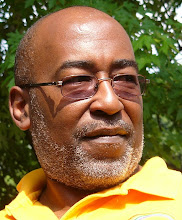
In the Sunday Gleaner of January 06, 2008 ( http://www.jamaica-gleaner.com/gleaner/20080106/focus/focus3.html), Kevin O'Brien Chang declared that:
In 1977, Prime Minister Michael Manley called for and got a new Public Service Commission (PSC). So did Prime Minister Edward Seaga in 1980. Now in 2007 some are making a big deal about Prime Minister Bruce Golding doing the same. Ken Jones and Ken Chan a mandate by the people to do whatever he thinks is in the best interests of the country, as long as he stays within the bounds of the constitution. Mr. Golding has not transgressed the constitution anymore than Mr. Manley or Mr. Seaga did. Every democracy allows its elected leader to choose his own management teams, subject to the scrutiny of relevant bodies. Surely the proper function of the PSC, which was not voted in by the people, is to make certain that the PM's picks are fit for the job, and not to impose selections he deems unsuitable upon him. And no self-respecting democracy would allow the head of its Public Service Commission - responsible for vetting all major public service jobs - to provide rent-free premises to any political candidate. Caesar's wife, etc ...
Like the other two Kens (Jones and Chaplin), Kevin’s reasoning owes little to fact or evidence that can be substantiated. . On December 11, 2007, Kevin carried much the same line of argument an interview on Nation News Network. During that interview, Kevin praised Ken Jones' position and defended the PM's dismissal of the PSC, suggesting that it had been guilty of misbehaviour because of an adverse judicial review decision in the matter of Lackston Robinson. Kevin was evidently unaware that "misbehaviour" is a legal construct that is not readily amenable to a lay interpretation. Further, I could see no sign that he had considered that that public/statutory bodies/decision-makers like the IDT, Resident Magistrates, Police Service Commission, et al are regularly the subject of adverse judicial review decisions, without any imputation of misbehaviour on the part of the decision-makers. Following his logic, every time a judge is reversed on appeal, that judge should resign for "misbehaviour".
I emailed Kevin in an attempt to set him straight on the legal issues, if nothing else. I even sent him a copy of the article that I had submitted in rebuttal of Ken Jones' piece of December 09, 2007. In his initial response, Kevin did not dispute the correctness of my position. He deflected my critique by suggesting, among other things that the media should have lawyers discuss these matters and not laypersons. He also thought that Stephen Vasciannie was foolishly allowing himself to be used as a political tool. Like many other commentators, Kevin accepted without question the tale that Stephen had called Golding a 'dead cat'. I subsequently sent Kevin the column in which this reference first appeared, which clearly demonstrated that Stephen did no such thing. Undeterred, Kevin insisted that this 'dead cat' reference disqualified Stephen from selection as SG. I pointed out to him that even if Stephen called Golding a 'dead cat' that this was legally irrelevant to the fact that Stephen was constitutionally selected to be the new SG. I also pointed out that the PM has persons in his administration (like Aundre Franklyn) who have said far worse things about him in the past. In simple terms, the Chief Servant is not constitutionally or ethically permitted to privilege his hurt feelings (assuming they are/were) over the rule of law. Vainly, I pointed out that Stephen is not being used as a political tool, but is simply standing up for principle
Despite all of this dialogue, Kevin wrote a column that appeared on Sunday 16, 2007 (http://www.jamaica-gleaner.com/gleaner/20071216/focus/focus2.html)in which he claimed:
The Public Service Commission impasse between Prime Minister and Opposition Leader has engendered much veranda gossip. Not being a lawyer, I leave the niceties to the shylocks. To my layman's ear, Ken Jones' December 9 Gleaner article made sense. O. Hilaire Sobers claims Mr. Jones' arguments are not legally persuasive. But since Michael Manley and Edward Seaga demanded and got new PSC members in 1976 and 1980, respectively, this hullabaloo seems a tempest in a teapot.
Once again, I attempted to engage Kevin on what I considered to be his mischaracterization of the issues.
On the issue of a presumptive convention of resignations, I pointed out to Kevin that:
First of all, if indeed such a convention exists, it would clearly undermine the presumptive constitutional autonomy/independence of the PSC from the political directorate. Essentially, the PSC would become nothing more than the rubber stamp of the political directorate, something that is clearly not contemplated by the design of constitutional service commissions.
Secondly, even if previous PSC members tendered their resignations at the request of a PM, this was done by choice, not compulsion. This history does not equate to a convention of resignation when requested by a PM.
Thirdly, if indeed there is a convention of asking for, or tendering resignations, one would have to ask why Prime Minister Golding did not insist on this upon assuming office (not only for the PSC, but for the other constitutional service commissions).
Fourthly, it is a matter of public knowledge that the "Vale Royal talks" between the JLP and PNP resulted in an agreement that future appointment of PSC members would be done by consensus, rather than the lower constitutional standard of consultation. As far as I am aware, the current PSC members were appointed under that formula.
Fifthly, the so-called convention of resignations is clearly inapplicable to this situation, given that the PSC members were fired for purported misbehaviour, as opposed to being asked to resign to make way for personnel favoured by the PM.
If, having regard to these considerations, you remain of the view that this situation is merely "a tempest in a teapot", my only inference must be that the termites have been nipping at your cranium.
Kevin's brief reply was that he only had 1200 words for the column, and that what people really wanted to hear about was the crime problem (his article was entitled Where's the crime plan?)
Now, three weeks later, the best that Kevin can offer is the same: reasoning untouched by facts, logic, or balance. Now, he goes as far as to declare that the PSC's job is to essentially rubber stamp the choices of the PM!!! Further, he repeats Mark Wignall's story about the Daisy Coke renting premises to Maxine Henry-Wilson, as if to say, there is something intrinsically wrong with such a commercial transaction. If Kevin had made some inquiries , he might have discovered that the building on the premises in question had been scheduled for demolition. The building itself had been stripped of all fixtures, and was subsequently rented to Maxine Henry-Wilson as is, where is, for a peppercorn rental. Nothing more, nothing less.
Sadly, journalists like Chang, Chaplin, and Jones reinforce a Jamaican practice of preferring the ease of suss and kass kass to the rigour of critical thinking.
Thursday, January 10, 2008
Intellectual dishonesty in the Jamaican media- the case of Kevin O'Brien Chang


Saturday, January 5, 2008
Unpublished letter to the editor in response to Ken Jones
In the interest of public education, allow me to do my own sifting of Ken Jones' latest emission of 'verbiage and garbage' which appeared in the Sunday Gleaner of December 09, 2007. Despite Mr. Jones' self-described training and experience as a journalist, his lack of intellectual rigour on the constitutional role and function of the Public Service Commission is staggering to say the least.
Unless Mr. Jones has again been sparring with imaginary opponents, nobody as far as I know, has argued in favour of "dictatorial powers" for the PSC. In this respect, Mr. Jones disingenously argues that these imaginary opponents "seem to believe that the PSC should have dictatorial powers and be able to defy the Government and deny its wishes even in such a vital case as the appointment of its main legal adviser."
Mr. Jones' view betrays a grave misapprehension of the role and function of service commisisons as they exist not only in Jamaica, but throughout the Commonwealth Caribbean. It is well established that service commissions, like the Public Service Commission, are not 'advisory' bodies, nor should they be. These commissions represent an important check and balance on the power of the executive arm of government, in selecting public service officers independently of political influence. Accordingly, the constitution of Jamaica is quite clear that the Prime Minister has no say in the selection of a Solicitor General. Caribbean constitutional scholars like Dr. Lloyd Barnett and Prof. Albert Fiadjoe have long affirmed this constitutional constraint on the political directorate (see Barnett's "The Constitution of Jamaica" and Fiadjoe's "Commonwealth Caribbean Public Law"). The constitutional autonomy of Service Commissions has also been judicially recognized by the Judicial Committee of the Privy Council in the 1982 case of Thomas v Attorney General of Trinidad & Tobago.
Ignoring this constitutional architecture, Mr. Jones pontificates that the framers of the constitution could not have intended to 'tie the hands' of a current Prime Minister, with respect to appointments to the Public Service Commission made by a previous Prime Minister. Given the nature and function of Service Commissions, this is precisely what was contemplated by the framers of the constitution! For the purpose of security of tenure, it was never intended for the appointments of PSC members to be coterminous with the administration of the government that appointed them. While it is true that the Prime Minister has the last word on the appointment of Public Service Commissioners, he must first consult with the Leader of the Opposition. Accordingly, the JLP would've had input while in Opposition in the appointments of the current Public Service Commissioners. I have not come across any record of the JLP objecting to the appointment of these Commissioners. Accordingly, it would be reasonable to infer that the appointments were made with bipartisan support, with no ostensible intention to 'tie the hands' of a future administration. Ultimately Mr. Jones seems not to appreciate that the PSC's primary loyalty is to the constitution of Jamaica and not to the government of the day.
Much of what Mr. Jones says about misbehaviour on the part of the PSC is hopelessly misguided and factually inaccurate. Mr. Jones seems not to appreciate that the concept of "misbehaviour" as a ground for dismissing PSC members is a legal construct. It is not simply a matter of fact, as is, for example, the death or resignation of a PSC member. It is therefore ultimately a matter for a court to determine whether misbehaviour has occurred with respect to the PSC and not the Prime Minister, or indeed a trained or experienced journalist like Mr. Jones. If Mr. Jones wishes to acquaint himself with the legal nuances of "misbehaviour", I refer him to the decision of the Judicial Committee of the Privy Council in the case of Julia Lawrence v Attorney General of Grenada. This judgment was delivered in March 2007. Having regard to this judgment, I am certainly of the view that there is no legal basis for ascribing misbehaviour to the PSC. Despite the imperative of natural justice, Mr. Jones seems obsessed with indicting the PSC members for misbehaviour without even notionally affording them the opportunity to be heard.
Mr. Jones cites the adverse judicial review of the PSC decision to retire a civil servant in the public interest as possibly constituting 'misbehaviour'. Firstly, it seems to escape Mr. Jones that public/statutory bodies are frequently the subject of adverse judicial reviews, without any suggestion of misbehaviour on their part. That is why there exists a substantive body of jurisprudence called administrative law. Secondly, if Mr. Jones is to be consistent, he should be equally ascribing 'misbehaviour' to the Police Service Commission when they recommended the retirement of Inspector Donovan O'Connor in the public interest. This decision was quashed by the Supreme Court (Justice Donald McIntosh) in August 2007, for failure to observe the rules of natural justice. As Mr. Jones might know, the Police Officers Association is threatening to sue the Police Service Comission for its alleged failure to consider applicants from the JCF before advertising the vacant post of Police Commissioner. Following Mr. Jones' logic, if the POA is successful, the Police Service Commission should immediately resign.
In his articles of November 18, 2007 and December 09, 2007, Mr. Jones passionately, but obtusely insists that only three PSC members participated in its deliberations/decisions on the selection of the Solicitor General; and that they relied on two other non-members, including a public officer. All of this, according to Mr. Jones, evidences possible misbehaviour on the part of the PSC. For Mr. Jones' information, the constitution unambiguously establishes that a quorum for service commissions (including the Public Service Commission) is three. Further, the regulations of the Public Service Commission authorize it to appoint a Selection Board to assist in processing candidates for public service positions. Accordingly, it is quite conceivable that the Hon. Carlton Davies and Mr. John Leiba might have constituted such a Selection Board for the purpose of processing candidates for the position of Solicitor General. The PSC cannot be expected to have a monopoly on the expertise required to process candidates. Accordingly, even if the regulations didn't exist, common sense would dictate reliance on external inputs, particularly the input of the Cabinet Secretary, who happens to be the head of the public service.
Mr. Jones recognizes that the "country cannot afford to waste talent such as Professor Vasciannie's", but blames the PSC for making him the centre of this controversy by its unwillingness to accede to the government's preferences. Having regard for what I said before about the constitutional role of the PSC, Mr. Jones' blame is misplaced. It is the government that is to be blamed for its unprincipled opposition to the PSC's recommendation, and not the PSC for standing by its recommendation, as it is constitutionally entitled to do.
Undeterred by facts, Mr. Jones finally claims that Jamaica's constitution needs to be clarified and that Jamaica is one of the few in the world where the Prime Minister does not appoint the Solicitor General. In this respect, he cites England, the US, Europe, and "most of the people's government (sic) in the Commonwealth." This status quo, Mr. Jones ascribes to "mental slavery". What arrant nonsense! Firstly, unless one is compulsively obtuse, there is no lack of clarity in the constitution about the role and independence of the Public Service Commission. Secondly, different countries have different models for the position of Solicitor General. In England and the USA, the solicitor general is a political appointee, which is not the case for most countries in the Commonwealth Caribbean, where the solicitor general is a public servant. Finally, the role and function of a solicitor general is not universal in the countries that he cites. The Solicitor General in the US and the UK are both charged with managing litigation on the government's behalf. Not so with the Solicitor General of Jamaica, who is akin to a Permanent Secretary, and who exercises both legal and administrative functions in managing the work of the Attorney General's Chambers.
At the end of the day, verbiage and garbage are no substitute for critical thinking and research. Perhaps one day, the trained and experienced Mr. Jones will realize this.