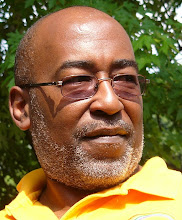
Former Attorney General and Opposition spokesman on justice, Senator A.J. Nicholson, QC, has a letter in today's Sunday Gleaner commenting on Dr. Sangster's public support of the PM's dismissal of the PSC. http://www.jamaica-gleaner.com/gleaner/20080203/letters/letters1.html.
One of the critical points addressed by Senator Nicholson is Dr. Sangster's claim that he (Dr. Sangster) made "three attempts to have the PSC members review the recommendation but he was not successful in having it withdrawn". Sangster did this because he believed that "the utterances of Professor Vasciannie could undermine the potential relationship between the office of the solicitor general and the prime minister".
Senator Nicholson pointedly asks: "Who told him so?" I agree with Senator Nicholson that it "certainly could not be an unprovoked assumption on his part", and that the "prime minister has never publicly given this as a reason for his actions." Senator Nicholson asked this question in the context of the express reasons given by the PM for dismissing the PSC. The issue of interpersonal compatibility with Prof. Vasciannie was certainly not one of these reasons. Indeed, Daisy Coke's affidavit (reported on in the Sunday Observer of Feb 03, 2008) expressly states that the PM had no personal difficulty with Prof. Vasciannie.
A.J.'s view of Dr. Sangster, that he has 'let the puss out of the bag', is perhaps the most charitable thing that can be said about Sangster. For me, Sangster has not really let the puss out of the bag, so much as he has simply reconfirmed what was already quite clear: that Bruce Golding's dismissal of the PSC was prompted by arbitrary considerations, and not by the rule of law.
Sunday, February 3, 2008
Letter of the day - Sangster lets the puss out the bag- Sunday Gleaner, Feb.03, 2008


Sunday Observer story on suit against PM by Daisy Coke, et al- Feb.03, 2008
The Sunday Observer has published an important story centred on the affidavit filed by Daisy Coke in the suit against the Prime Minister, challenging his dismissal of the PSC. It is definitely a must-read.
http://activepaper.olivesoftware.com/Repository/ml.asp?Ref=Sk1PLzIwMDgvMDIvMDMjQXIwMDEwMQ==&Mode=Gif&Locale=english-skin-custom
Thursday, January 31, 2008
My letter appearing in today's Gleaner- "Sangster and the PSC"
Today, the Gleaner published my critique of Alfred Sangster's public condemnation of his erstwhile colleagues and his support of the PM dismissal of the PSC. Here is the link:
http://www.jamaica-gleaner.com/gleaner/20080131/letters/letters2.html
Wednesday, January 30, 2008
Alfred Sangster breaks ranks
As has been reported in the news, Dr. Alfred Sangster has publicly defended the PM's dismissal of the Coke-chaired PSC, of which he was a member. According to Dr. Sangster, the PSC's failure to reinstate Lackston Robinson constitutes misconduct that warrants dismissal. He also pointed the failure of the the PSC to review its recommendation of Stephen Vasciannie (at Dr. Sangster's urging) after the Stephen Vasciannie's 'dead cat' reference came to his (Dr. Sangster's) attention.
Dr. Sangster's public utterances coincide with the commencement of litigation by his erstwhile colleagues to challenge the dismissal.
Dr. Sangster's pronouncements are disturbing, and indeed execrable. Firstly, he is factually wrong about the PSC's supposed failure to reinstate Lackston Robinson, given that the Justice Jones never ordered Mr. Robinson's reinstatement, when he quashed the PSC decision to retire Robinson in the public interest. Dr. Sangster has clearly acquainted himself with the judgment of Justice Jones, before attacking his former colleagues. Dr. Sangster has correctly pointed out that he was not a member of the PSC that was the subject of Justice Jones' judgment (the PSC was at the time made up of Daisy Coke, Pauline Findlay, Mike Fennell, Edwin Jones, and George Philip; Sangster replaced Philip when he died in April 2007)). One might have thought that pride alone might have impelled Dr. Sangster to protest his dismissal at least on this ground, given that he was not a member of this 'misbehaving' PSC.
One has to wonder why Dr. Sangster chose to speak at this time, or at all. While it is his prerogative not to join in the litigation, I see no rational or ethical basis for belatedly excoriating his colleagues, when he well knows that the matter is under litigation. I can only suspect that he was intent on prejudicing the minds of judges who may later be assigned to adjudicate on the claim of Daisy Coke, et al.
I can hardly believe shame has not prevented him from raising the 'dead cat' reference. He clearly stated that his concern arose only after the PSC had signed off on the recommendation of Stephen Vasciannie. The essential implication of Dr. Sangster's thinking is that Stephen Vasciannie should have been denied selection as SG, not because of lack of qualifications, but for a public criticism of Bruce Golding made in 2002! For me, if this is Sangster's mode of thinking, then he certainly had no place on the PSC. Sangster speculated that this commentary could create strained relations between the Stephen Vasciannie (as SG) and the Prime Minister. Naturally, of course, Dr. Sangster did not require any evidence to substantiate his position. Sangster reflects the very worst in Jamaican governance: the privileging of personality over principle, and not to mention, suss over hard evidence; loyalty to expedience over ethicality; and cowardice over conscience.
I have submitted a letter to the press on the issue, which hopefully will be published. I discussed the matter on the Breakfast Club yesterday morning with Trevor Munroe and Peter Espeut. Apparently Dr. Sangster had been invited on the programme, but declined.
Sangster should be ashamed of himself.
Sunday, January 27, 2008
Response to Laurie Ventour's letter of the day of Sunday, January 20, 2008
Laurie (L.L.) Ventour had a letter in the Sunday Gleaner of January 20, 2008, in which he blamed the PSC for the debacle involving Stephen Vasciannie. I had sent a response to the Gleaner which so far has not been published. I set it out below for your information.
January 21, 2008
Dear Editor,
I write in response to L.L. Ventour's letter of the day which appeared in the Sunday Gleaner of January 20, 2008.
Mr. Ventour blames the Public Service Commission for the imbroglio surrounding its selection of Prof. Stephen Vasciannie as Solicitor General. According to Mr. Ventour, there were "more than four 'strikes' against the then PSC, including breach of the spirit of convention - to offer their resignation en masse on the change of an administration and, in the absence of an appeal against the judgment, the possibility of a charge of contempt of court for their apparent refusal to reinstate an employee, but purporting to transfer him to another post, in what may be seen as clear defiance." According to Mr. Ventour, "No PSC should - nor could - continue in office with such baggage and controversy on its performance" because "It quickly leads to a perceived loss of moral integrity, authority and credibility".
Mr. Ventour's blame, in my view, is entirely misplaced. Firstly, there is no convention of resignations by Service Commissions upon a change of administration. This applies only to statutory bodies. In any event, given the constitutional design of Service Commissions, en bloc resignations would be repugnant to the notion that these bodies are supposed to be independent of political influence. If the political directorate is allowed to reconstitute the Service Commissions at will, then clearly there is no point to having these bodies at all, as they would simply be treated or perceived as rubber stamps for political decisions. If indeed a convention of resignations exists, why then didn’t the members of the Police Service Commission and the Judicial Service Commission resign after the new government took office in September 2007?
Contrary to prevailing public opinion, the PSC was never in contempt of an order of the Supreme Court. The judgment of Mr. Justice Jones quashed the order of the PSC to retire Lackston Robinson from the public service in the public interest. Many laypersons do not understand that the nature of the proceedings before Mr. Justice Jones was judicial review. What this means is that the court was concerned only with the legality of the PSC's decision, which it found to be unlawful. The judge did not expressly order the reinstatement of Mr. Robinson in the public service (or the Attorney General's Chambers in particular) because this would be tantamount to substituting his judgment for that of the PSC. Following the judgment, it was open to the PSC to repeat the process of retiring Mr. Robinson in the public interest, provided that it followed the legally prescribed steps to do so. It was also within the constitutional discretion of the PSC to reassign Mr. Robinson to another post in the public service, which indeed, it attempted to do. It should be emphasized that Mr. Robinson was unlawfully retired from the public service, and not the AG's Chambers, per se. It is therefore quite unfair to accuse the PSC of contempt of court or defiance, for doing precisely what they are lawfully authorized to do.
With due respect to Mr. Ventour, the blame for this imbroglio is attributable entirely to the actions of the Prime Minister. Under Jamaica's constitution, the PSC has the exclusive authority over the selection of the Solicitor General. The Prime Minister chose to disregard the constitutional autonomy of the PSC, later firing the PSC members when they failed to alter their recommendation to suit his political preferences. It is palpably clear that the PSC members would not have been dismissed had they acceded to the PM's wishes.
Finally, I note that Mr. Ventour considered Prof. Vasciannie's 'dead cat' comment in his column to be "intemperate", and that history has ultimately "absolved Mr. Golding in this regard". Mr. Ventour's view betrays a misapprehension of the context in which this metaphor was used. At the time of Prof. Vasciannie's column (September 2002), general elections were due in October 2002. The 'dead cat' metaphor was applied to explain the effect of Bruce Golding's return to the JLP on the PNP's chances of returning to power. In simple language, Prof. Vasciannie was saying that Bruce Golding's return would cause some momentary concern on the part of the PNP, but would not ultimately hurt its chances of returning to power in the October 2002 elections. Given the outcome of the 2002 general elections, I do believe that history has absolved Prof. Vasciannie in this respect.
Yours truly,
O. Hilaire Sobers
Washington, DC
ohilaire@yahoo.com
Tuesday, January 22, 2008
Post of Solicitor General to be advertised (again!)
According to a news report today from RJR (http://www.radiojamaica.com/content/view/4821/26/), instructions have been issued for the post of Solicitor General to be advertised in the local press in the next 10 days.
Assuming the accuracy of this story, these instructions emanate from the "new" PSC, perhaps acting on the instructions of the government. This step reinforces the utter contempt that the government/"new" PSC has for the rule of law, and the pending judicial review litigation. As far as I am aware, the Coke-led PSC made a selection that was in accordance with the law. On basis therefore, can the Rainford-led PSC ignore the previous recommendation and commence the process of selection anew? If a new SG is selected by the Rainford PSC, what are the legal implications for his/her appointment, if the courts find that the Coke PSC was unlawfully dismissed? Would that not mean that all decisions and processes emenating from the Rainford PSC are inherently null and void?
The government's contempt for due process and the rule of law seems unbridled. This contempt has victimized Stephen Vasciannie, the Coke PSC, and not least of all the people of Jamaica. Lamentably, many Jamaicans are either indifferent to, or actively supportive of the government's contempt for the rule of law, and by extension, its contempt for the very same people. We just don't seem to get it.
Monday, January 21, 2008
Commentary on Mark Wignall column that appeared in the Sunday Observer of December 02, 2007
Here is a commentary that I sent to Mark Wignall on a column of his that appeared in the Sunday Observer of December 02, 2007 http://www.jamaicaobserver.com/columns/html/20071201t170000-0500_129967_obs_election_win___but_little_power_.asp.
December 02, 2007
Dear Mark,
A few comments on your column appearing in today's Sunday Observer.
You stated:
The members of the PSC who met on October 2, 2007, were Daisy Coke, Mike Fennel and Pauline Findlay. Others who comprised the interviewing panel were Carlton Davies, cabinet secretary; and John Leiba, president, Bar Association of Jamaica.
According to the Jamaica Constitution, Chapter 10, Section 136, 2 - 'At any meeting of any Commission established by this Constitution a quorum shall be constituted if three members are present. If a quorum is present the Commission shall not be disqualified for the transaction of business by reason of any vacancy among its members and any proceedings of the Commission shall be valid, notwithstanding that some person who was not entitled so to do took part therein.'
I am no lawyer, but something in that section puzzles me. It states that a quorum constitutes three members. No problem with that. What I am at a loss in fathoming is this, 'If a quorum is present the Commission shall not be disqualified by reason of any vacancy among its members...'
Vacancy? Does the constitution mean 'absence'? I cannot see it meaning absence if there is a quorum. If 'vacancy' means that the PSC had recently lost one of its members, how would that bear on a matter or decision which was deliberated/made with a duly constituted quorum? And certainly 'vacany' could never bear any reference to the mental state of any member of the PSC.
But even if the section was making a reference to the three members who formed a quorum making a decision that they needed personnel to assist them in the interviewing process, what is the meaning of, ... any proceedings of the Commission shall be valid notwithstanding that some person who was not entitled to do so took part therein'?
Does this mean that Vasciannie, Foster and Leys could have sat in and deliberated on their own interviews?
I could have sought legal assistance in attempting to clarify the section, but my lawyer friends all speak Swahili while I speak English.
In another part of the Jamaican Constitution, Chapter 9, Part 1, 125, Section 3, the following is stated:
'No person shall be qualified to be appointed as a member of the Public Service Commission if he holds or is acting in any public office other than the office of the Judicial Services Commission or, member of the Police Service Commission.'
Question: Is there some fundamental difference to be drawn in the make-up of the PSC when meeting to discuss everyday business as against conducting interviews? Dr Carlton Davies, cabinet secretary and brother to Dr Omar Davies, recently minister of finance in the PNP government, is not, as far as I know, a member of the JSC or the Police Service Commission. Question: Why was he on the interviewing panel?
Mark, I would've been happy to assist you with interpreting these constitutional provisions, had you asked.
Let me see if I can explain in simple terms. Firstly, it is useful to read all of the constitutional provisions relating to the Public Service Commission, before attempting to interpret a particular section that relates to all Service Commissions established under the constitution. If you look at section 124 (5) of the constitution "vacancy" has a particular meaning would apply to any references to "vacancy" in section 136 (2).
Under section 124 (5), the office of a member of the Public Service Commission becomes "vacant" in certain circumstances, for example: expiry of appointment; resignation; appointment to public office (other than Judicial Service Commission or Police Service Commission) and removal by the Governor General (on the advice of the Prime Minister after consultation with the Leader of the Opposition) for infirmity or misbehaviour.
Note that section 124 (5) provides for a Public Service Commission consisting of a chairman and at least three other members, but not more than five other members. Vacancy, then, does not mean 'absence" The effect of section 136 (2) is to (a) prescribe a quorum for the transaction of the business of a Service Commission (such as the Public Service Commission); and (b) to validate any business transacted by a Service Commission, despite any vacancies (as constitutionally defined) in their overall number.
Let me use an example to illustrate. Let's say that a Commission is made up of four
members, for argument's sake, Daisy Coke (chair), Pauline Findlay, Rex Fennel, and Alfred Sangster. Daisy, Pauline and Alfred meet on October 1 to consider an application for public service position. They adjourn their deliberations until October 15. Rex is absent. On October 8, Alfred is appointed Commissioner of Police.
Upon his appointment, his position on the Public Service Commission immediately becomes vacant. On October 15, Daisy, Pauline, Rex, and Alfred all meet to continue deliberations and to make a decision. Technically, Alfred is no longer a member of the PSC. However, section 136 (2) simply validates the transaction of business of the PSC at their meeting on October 15, notwithstanding that (a) there was a vacancy in their overall number; and (b)
Alfred would've been technically not entitled to participate in their deliberations.
I hope this is clear.
You raised the question of whether there is some fundamental difference to be drawn in the make-up of the PSC when meeting to discuss everyday business as against conducting interviews. You pointed out that Dr Carlton Davies, cabinet secretary is not a member of the Judicial Service Commission or the Police Service Commission. You asked why he was a member of the interviewing panel.
I thought that I had clarified this in earlier emails to you. While it is true that Dr. Davies is not a member of the PSC, it is quite common for Service Commissions to rely on external expertise to evaluate candidates for public office. The critical issue is not whether he participated in the interviewing process, but in the ultimate decision of the PSC. I had previously referred you to the Public Service Regulations which clearly authorize the PSC to rely on a Selection Board in processing applications. I note that you made no reference to this in your column.
It is quite conceivable that Dr. Davies was part of a Selection Board, as indeed, John Leiba, the president of the Jamaican Bar Association. You would be aware the Cabinet Secretary is head of the public service in Jamaica. It seems more than reasonable to expect the PSC to rely on his input in evaluating candidates for public service and making recommendations. It is axiomatic that tribunals like the PSC have to rely on external advice, given that such tribunals will hardly have a monopoly on the expertise or information necessary to make sound decisions. In the same way, ministers of government rely on the advice of technocrats and others in crafting or implementing policy decisions.
You also raised the question of whether the PSC's "exit interview" with Michael Hylton 'coloured the decision made on the SG's appointment'. Once again, Mark, it would be prudent for the PSC to interview the outgoing SG, presumably to get his input on the nature and role of the SG; the qualifications required for the position; and perhaps his view on which candidate best met the qualifications. I would fully expect Michael's views to influence the views of the PSC, but not necessarily in the negative sense that you imply. It certainly would not have been Michael's place to 'direct' the PSC, and given what I personally know of two of the PSC members, such 'directions' would not have been entertained.
Regarding the participation of Pauline Findlay, I had already addressed this in detail. In summary, I repeat my position that Pauline's relationship with Michael Hylton was legally immaterial to her deliberations as a Public Service Commissioner. Further, to the best of my knowledge, the PSC's recommendation of Prof. Vasciannie was unanimous. Even if one imputes bias to the PSC in selecting Vasciannie, it is palpably clear (based on his resume) that any impartial/unbiased tribunal could have come to the same decision. From the perspective of Jamaica's tabloid culture, perhaps Pauline might have been better off not participating in the deliberations. However, having done so, there is, in my view, no sound legal or ethical objection to her participation.
You raise the question of why Vasciannie would want to work with a JLP administration. You refer to his supposed paucity of courtroom experience, mistrust between the SG and the government, his previous "dead cat" criticism of Bruce Golding. You conclude that "For the administration to work effectively it must have some say in those who will be chief legal advisers to the Government."
Firstly, I am not sure that you clearly understand the role and function of a Solicitor General or how a Solicitor General interfaces with the political directorate. The post of Solicitor General in Jamaica and the rest of the Commonwealth Caribbean is akin to a Permanent Secretary of a Ministry. The Solicitor General is essentially the CEO of the Chambers of the Attorney General, responsible for planning, directing, and organizing the work Chambers in accordance with policy prescribed by the Attorney General. While it is true that the Solicitor General must be a lawyer/advisor, it is equally true that the
Solicitor General must also be an administrator. It seems, therefore, that an ideal candidate for the position of SG requires a blend of skills, and not just those of a specialist litigator. The SG is not, and cannot be expected to be an expert in every area of the law that the AG's Chambers deals with. The SG does not rely only upon himself to address difficult areas of law that arise in the courts (or elsewhere), but upon a team of colleagues, which include two Deputy Solicitors General and five divisional directors.
Michael Hylton, a specialist litigator, had no particular expertise in international law. Michael relied on Stephen for this expertise in the AG's Chambers, as one would expect. Similarly, one the assumption that Stephen is 'weak' in litigation experience, he would have available to him experienced litigators like Patrick Foster, QC for advice and input. Just like the PSC, the SG will rely on advisers to discharge his functions.
From a point of view of practicality, it would not be feasible for the Solicitor General to spend most of his time in court. Having been a litigation lawyer myself, it is quite impossible to efficiently combine multiple court-room appearances with the demands of managing, directing and planning the work of a large Chambers of lawyers.
Indeed, in my experience, if one is to look at the management of large law firms, Managing Partners are rarely litigators; or if they are, they jettison much of their litigation practice in order to function as Managing Partners.
It is quite incorrect to refer to characterize the office of Solicitor General as a "chief legal adviser" to the prime minister. It should be noted that the Solicitor General is not the personal lawyer of the Prime Minister or any other political functionary; accordingly, the issue of confidence is neither here nor there. The SG does not generally interface personally with the PM. Most of the SG's interactions (and indeed that of his staff) is with other government ministries/departments, and moreso with permanent functionaries than political ones.
If the Constitution contemplated that the PM should necessarily be comfortable with the PSC's choice of SG, it could have said so, as it suggests in respect of Permanent Secretaries and the Financial Secretary. But it is silent on the point, giving rise to the view that the PM's comfort level is not a decisive factor in the law. From this perspective, any purported discomfort that the PM might have with Vasciannie because of previous history is constitutionally irrelevant.
The relationship of the SG to the government cannot be likened to a conventional relationship between a private lawyer and a client. While a conventional client has freedom to hire and fire his/her lawyer at will, the government has no such freedom outside of the political appointment of the Attorney General. Unlike a conventional client, State bodies do not usually have the privilege of rejecting or ignoring advice given by the Attorney General’s Chambers.
Best regards,
Hilaire
Thursday, January 10, 2008
Intellectual dishonesty in the Jamaican media- the case of Kevin O'Brien Chang
In the Sunday Gleaner of January 06, 2008 ( http://www.jamaica-gleaner.com/gleaner/20080106/focus/focus3.html), Kevin O'Brien Chang declared that:
In 1977, Prime Minister Michael Manley called for and got a new Public Service Commission (PSC). So did Prime Minister Edward Seaga in 1980. Now in 2007 some are making a big deal about Prime Minister Bruce Golding doing the same. Ken Jones and Ken Chan a mandate by the people to do whatever he thinks is in the best interests of the country, as long as he stays within the bounds of the constitution. Mr. Golding has not transgressed the constitution anymore than Mr. Manley or Mr. Seaga did. Every democracy allows its elected leader to choose his own management teams, subject to the scrutiny of relevant bodies. Surely the proper function of the PSC, which was not voted in by the people, is to make certain that the PM's picks are fit for the job, and not to impose selections he deems unsuitable upon him. And no self-respecting democracy would allow the head of its Public Service Commission - responsible for vetting all major public service jobs - to provide rent-free premises to any political candidate. Caesar's wife, etc ...
Like the other two Kens (Jones and Chaplin), Kevin’s reasoning owes little to fact or evidence that can be substantiated. . On December 11, 2007, Kevin carried much the same line of argument an interview on Nation News Network. During that interview, Kevin praised Ken Jones' position and defended the PM's dismissal of the PSC, suggesting that it had been guilty of misbehaviour because of an adverse judicial review decision in the matter of Lackston Robinson. Kevin was evidently unaware that "misbehaviour" is a legal construct that is not readily amenable to a lay interpretation. Further, I could see no sign that he had considered that that public/statutory bodies/decision-makers like the IDT, Resident Magistrates, Police Service Commission, et al are regularly the subject of adverse judicial review decisions, without any imputation of misbehaviour on the part of the decision-makers. Following his logic, every time a judge is reversed on appeal, that judge should resign for "misbehaviour".
I emailed Kevin in an attempt to set him straight on the legal issues, if nothing else. I even sent him a copy of the article that I had submitted in rebuttal of Ken Jones' piece of December 09, 2007. In his initial response, Kevin did not dispute the correctness of my position. He deflected my critique by suggesting, among other things that the media should have lawyers discuss these matters and not laypersons. He also thought that Stephen Vasciannie was foolishly allowing himself to be used as a political tool. Like many other commentators, Kevin accepted without question the tale that Stephen had called Golding a 'dead cat'. I subsequently sent Kevin the column in which this reference first appeared, which clearly demonstrated that Stephen did no such thing. Undeterred, Kevin insisted that this 'dead cat' reference disqualified Stephen from selection as SG. I pointed out to him that even if Stephen called Golding a 'dead cat' that this was legally irrelevant to the fact that Stephen was constitutionally selected to be the new SG. I also pointed out that the PM has persons in his administration (like Aundre Franklyn) who have said far worse things about him in the past. In simple terms, the Chief Servant is not constitutionally or ethically permitted to privilege his hurt feelings (assuming they are/were) over the rule of law. Vainly, I pointed out that Stephen is not being used as a political tool, but is simply standing up for principle
Despite all of this dialogue, Kevin wrote a column that appeared on Sunday 16, 2007 (http://www.jamaica-gleaner.com/gleaner/20071216/focus/focus2.html)in which he claimed:
The Public Service Commission impasse between Prime Minister and Opposition Leader has engendered much veranda gossip. Not being a lawyer, I leave the niceties to the shylocks. To my layman's ear, Ken Jones' December 9 Gleaner article made sense. O. Hilaire Sobers claims Mr. Jones' arguments are not legally persuasive. But since Michael Manley and Edward Seaga demanded and got new PSC members in 1976 and 1980, respectively, this hullabaloo seems a tempest in a teapot.
Once again, I attempted to engage Kevin on what I considered to be his mischaracterization of the issues.
On the issue of a presumptive convention of resignations, I pointed out to Kevin that:
First of all, if indeed such a convention exists, it would clearly undermine the presumptive constitutional autonomy/independence of the PSC from the political directorate. Essentially, the PSC would become nothing more than the rubber stamp of the political directorate, something that is clearly not contemplated by the design of constitutional service commissions.
Secondly, even if previous PSC members tendered their resignations at the request of a PM, this was done by choice, not compulsion. This history does not equate to a convention of resignation when requested by a PM.
Thirdly, if indeed there is a convention of asking for, or tendering resignations, one would have to ask why Prime Minister Golding did not insist on this upon assuming office (not only for the PSC, but for the other constitutional service commissions).
Fourthly, it is a matter of public knowledge that the "Vale Royal talks" between the JLP and PNP resulted in an agreement that future appointment of PSC members would be done by consensus, rather than the lower constitutional standard of consultation. As far as I am aware, the current PSC members were appointed under that formula.
Fifthly, the so-called convention of resignations is clearly inapplicable to this situation, given that the PSC members were fired for purported misbehaviour, as opposed to being asked to resign to make way for personnel favoured by the PM.
If, having regard to these considerations, you remain of the view that this situation is merely "a tempest in a teapot", my only inference must be that the termites have been nipping at your cranium.
Kevin's brief reply was that he only had 1200 words for the column, and that what people really wanted to hear about was the crime problem (his article was entitled Where's the crime plan?)
Now, three weeks later, the best that Kevin can offer is the same: reasoning untouched by facts, logic, or balance. Now, he goes as far as to declare that the PSC's job is to essentially rubber stamp the choices of the PM!!! Further, he repeats Mark Wignall's story about the Daisy Coke renting premises to Maxine Henry-Wilson, as if to say, there is something intrinsically wrong with such a commercial transaction. If Kevin had made some inquiries , he might have discovered that the building on the premises in question had been scheduled for demolition. The building itself had been stripped of all fixtures, and was subsequently rented to Maxine Henry-Wilson as is, where is, for a peppercorn rental. Nothing more, nothing less.
Sadly, journalists like Chang, Chaplin, and Jones reinforce a Jamaican practice of preferring the ease of suss and kass kass to the rigour of critical thinking.
Wednesday, January 9, 2008
Appointment of new PSC members
Yesterday, Kings House announced the appointment of five new members of the Public Service Commission, headed by Amb. Donald Rainford. The announcement was made despite the litigation that is about to commence on January 10 challenging the lawfulness of the PM's recommendation for dismissal of the previous members of the PSC. Recently, the Leader of the Opposition had asked the PM to hold off on new nominations, but the PM has clearly ignored this request. One wonders what implications this will have for the 2005 decision of the political parties to have consensus on appointments to Services Commissions. The rule of law continues to be masticated and spat out.
Another strange feature of this reappointment process is the participation of the Jamaica Civil Service Association. Under the constitution, one of the PSC members must be a nominee of the JCSA. The new JCSA nominee is Audrey Hastings, who is reportedly a former secretary of the JCSA. Given the JCSA's opposition to the PM firing of the Daisy Coke-chaired PSC, I wonder why they have opted to cooperate with the PM now in nominating someone for the new PSC.
If the Supreme Court rules that the government acted unlawfully in recommending the dismissal of the Coke PSC, then surely that must mean that the appointment of the Rainford PSC cannot stand in law. Any appointments made by the Rainford PSC must also suffer the same legal consequence. Oh what a mess! What may compound this is if the Coke PSC successfully challenges the PM's grounds for their dismissal. As I have said elsewhere, the misbehaviour grounds are unlikely to withstand proper legal scrutiny.
Discussion on "This Morning" programme- Nation News Network
I was on the NNN's morning programme today with Emily Crooks and Naomi Francis to discuss some dimensions of the PSC issue, as well as the Attorney General's declared role in personnel management decisions in the AG Chambers. Frank Phipps, QC, chairman of the Farquharson Institute was also on at the same time to speak about the Institute's call for an inquiry into the operations of the AG's Chambers. For information, here's a post-show note that I sent to the hosts.
Dear ladies,
Thank you for having me on this morning. There are a couple of things that I don't think that I was able to adequately explain or clarify.
1. Nature of judicial review. Emily, you made reference to the judgment of Jones J which quashed the decision of the PSC to retire Lackston Robinson in the public interest. As I tried to explain, the nature of judicial review is simply an exercise by the Supreme Court to determine whether a decision by a public authority/functionary was lawful. A review is not the same thing as an appeal, although at times there can be some overlap. While Jones J was critical of the PSC, what is of paramount importance is the substance and effect of his ruling. His ruling simply declared that the PSC decision was wrong in law, and that it should be quashed (by order of certiorari). There is nothing in the judgment that mandated the reinstatement of Lackston Robinson, as (a) this would exceed the judicial review jurisdiction of the court; and (b) such an order, if made, would effectively substitute the judgment of the court for the discretion of the PSC. This is legally untenable. As I pointed out, it was open to the PSC following the judgment to again decide retire Lackston Robinson in the public interest, a decision that would be unchallengeable if done strictly in accordance with the law.
With respect to the pending judicial review litigation, let me reiterate that an adverse decision by the court would have implications for the previous PSC as well as the new one. If the court finds that the PM acted unlawfully in recommending the dismissal of the PSC members, then the legal implication of this would be that Daisy Coke et al, would in law remain lawful members of the PSC. Accordingly, the appointment of the new PSC members headed by Amb. Rainford would ipso facto, be void and of no legal effect. One of the real difficulties that could arise is the legal status of any selections made by the new PSC, if a court subsequently holds that the new PSC was unlawfully appointed. If a court finds against the PM, the PM, would, like the PSC be entitled to repeat the process of dismissal, but only in accordance with the law. If he again breached the law in dismissing the PSC, his decision would again be subject to the judicial review of the court.
2. Interference by the AG It seems that both of you seem to believe that the AG is justified in having an input in the selection of permanent members of staff. The AG has plainly stated that she is not prepared to allow the Exec Cttee to exercise any role in this regard, and that she must have the ultimate say. In her interview with you earlier this week, she partly grounded her position on the notion that the AG's Chambers is a department of the Ministry of Justice.
Firstly, the AG's conduct is without precedent, certainly as far as the AG's Chambers is concerned. It is trite constitutional law that political functionaries like the AG have NO say in the selection of permanent members of the civil service. This is in keeping with our constitutional design which segregrates political functionaries from public service functionaries. The raision d'etre of Service Commissions is to ensure that appointments to the public service are not tainted by political interference. The implications of political functionaries having a free hand to select public service officials are obvious. The modus operandi of the Exec Cttee is in keeping with our constitutional design. This Committee, I understand, was established by Michael Hylton during his tenure as SG, and served to deal with all personnel issues, prior to making recommendations to the PSC. Over the past decade or two, the PSC has, as a policy, devolved far more discretion on line managers in government ministries/departments in personnel matters, for good reasons of efficiency and effectiveness. It is quite impossible for the PSC, a body that sits part-time, to be involved in the minutiae of ALL public service selections/appointments. By rough analogy, one does not expect the CEO of a major corporation to be involved in the minutiae of personnel; this is left to a personnel manager/dept that does the initial sifting/processing before recommendations are presented to the CEO for approval. In some corporations, the CEO simply delegates the final decision to a senior officer.
The AG's Chambers is not in law, a department of the Ministry of Justice. In law, the AG is a specific office established by section 79 of the constitution. While the Ministry of Justice may have portfolio responsibility for this office, there is no reporting relationship (in law) between the AG and the Ministry of Justice. Traditionally, the posts of AG and Minister of Justice have tended to be held by one person. However, these posts are legally separate. If, for argument's sake, the posts were held by different persons, the AG would have not be obliged to report to the Minister of Justice. Accordingly, it seems to follow to me that the permanent staff of the AG are equally not obliged to report to the Minister of Justice.
By comparison, the office of the DPP also falls under the portfolio of the Justice Ministry, but the Minister cannot exercise any say in the personnel matters relating to the DPP's department. Like the AG, the DPP is a constitutional creature who is not answerable to any political functionary. Similarly, the management of the courts falls under the Ministry of Justice. You can rest assured that the Minister of Justice has no say in the staffing of the courts; this falls exclusively to the PSC.
3. Implications of AG's conduct. While you may both consider it appropriate for the AG to have a say in personnel matters regarding her Chambers, I am not sure if you have fully considered the implications of this approach with respect to other areas of government service. The AG's precedent opens the way for other political functionaries to bypass the constitution and the rule of law, in terms of staffing the public service with loyalists, rather than professionals. In the event that there is a change of government, would you not expect the new government to do the same thing? Assuming that the new PSC remains in place, is it not reasonable to assume that they will be prepared to do the JLP's bidding and rubberstamp selections made by political functionaries? Again, if and when the government changes, wouldn't it be reasonable to assume that the new government would then seek to replace the PSC with its own people, so as to secure their own public service selections? Why indeed confine it to the civil service? If, for argument's sake, the courts rule against the government in the pending litigation, what is to stop the government from firing the judge or judges who ruled against it? In terms of selections by the Judicial Service Commission for appointment/promotion to the bench, what is there to stop the JLP government from firing the JSC, if the JSC insists on a recommendation that the government doesn't like?
One of the things that seems to have eluded many of us in this debate is that the government apparatus is not the personal fiefdom of a particular party or PM. Much has been said about the need for the PM and/or AG to be able to have people around them that retain their confidence. Few seem to recognize that the constitution does not give them the luxury of hiring or firing according to their personal taste, nor should it. The nature of government is that political functionaries are obliged to cooperate with civil servants whether they like them or not. If there is a basis for complaint/dismissal, there are available mechanisms. This notion that the lawyers of the AG's Chambers are obliged to adapt to Dorothy, rather than the other way around, is, frankly, ludicrous.
More anon,
Hilaire
Saturday, January 5, 2008
Unpublished letter to the editor in response to Ken Jones
In the interest of public education, allow me to do my own sifting of Ken Jones' latest emission of 'verbiage and garbage' which appeared in the Sunday Gleaner of December 09, 2007. Despite Mr. Jones' self-described training and experience as a journalist, his lack of intellectual rigour on the constitutional role and function of the Public Service Commission is staggering to say the least.
Unless Mr. Jones has again been sparring with imaginary opponents, nobody as far as I know, has argued in favour of "dictatorial powers" for the PSC. In this respect, Mr. Jones disingenously argues that these imaginary opponents "seem to believe that the PSC should have dictatorial powers and be able to defy the Government and deny its wishes even in such a vital case as the appointment of its main legal adviser."
Mr. Jones' view betrays a grave misapprehension of the role and function of service commisisons as they exist not only in Jamaica, but throughout the Commonwealth Caribbean. It is well established that service commissions, like the Public Service Commission, are not 'advisory' bodies, nor should they be. These commissions represent an important check and balance on the power of the executive arm of government, in selecting public service officers independently of political influence. Accordingly, the constitution of Jamaica is quite clear that the Prime Minister has no say in the selection of a Solicitor General. Caribbean constitutional scholars like Dr. Lloyd Barnett and Prof. Albert Fiadjoe have long affirmed this constitutional constraint on the political directorate (see Barnett's "The Constitution of Jamaica" and Fiadjoe's "Commonwealth Caribbean Public Law"). The constitutional autonomy of Service Commissions has also been judicially recognized by the Judicial Committee of the Privy Council in the 1982 case of Thomas v Attorney General of Trinidad & Tobago.
Ignoring this constitutional architecture, Mr. Jones pontificates that the framers of the constitution could not have intended to 'tie the hands' of a current Prime Minister, with respect to appointments to the Public Service Commission made by a previous Prime Minister. Given the nature and function of Service Commissions, this is precisely what was contemplated by the framers of the constitution! For the purpose of security of tenure, it was never intended for the appointments of PSC members to be coterminous with the administration of the government that appointed them. While it is true that the Prime Minister has the last word on the appointment of Public Service Commissioners, he must first consult with the Leader of the Opposition. Accordingly, the JLP would've had input while in Opposition in the appointments of the current Public Service Commissioners. I have not come across any record of the JLP objecting to the appointment of these Commissioners. Accordingly, it would be reasonable to infer that the appointments were made with bipartisan support, with no ostensible intention to 'tie the hands' of a future administration. Ultimately Mr. Jones seems not to appreciate that the PSC's primary loyalty is to the constitution of Jamaica and not to the government of the day.
Much of what Mr. Jones says about misbehaviour on the part of the PSC is hopelessly misguided and factually inaccurate. Mr. Jones seems not to appreciate that the concept of "misbehaviour" as a ground for dismissing PSC members is a legal construct. It is not simply a matter of fact, as is, for example, the death or resignation of a PSC member. It is therefore ultimately a matter for a court to determine whether misbehaviour has occurred with respect to the PSC and not the Prime Minister, or indeed a trained or experienced journalist like Mr. Jones. If Mr. Jones wishes to acquaint himself with the legal nuances of "misbehaviour", I refer him to the decision of the Judicial Committee of the Privy Council in the case of Julia Lawrence v Attorney General of Grenada. This judgment was delivered in March 2007. Having regard to this judgment, I am certainly of the view that there is no legal basis for ascribing misbehaviour to the PSC. Despite the imperative of natural justice, Mr. Jones seems obsessed with indicting the PSC members for misbehaviour without even notionally affording them the opportunity to be heard.
Mr. Jones cites the adverse judicial review of the PSC decision to retire a civil servant in the public interest as possibly constituting 'misbehaviour'. Firstly, it seems to escape Mr. Jones that public/statutory bodies are frequently the subject of adverse judicial reviews, without any suggestion of misbehaviour on their part. That is why there exists a substantive body of jurisprudence called administrative law. Secondly, if Mr. Jones is to be consistent, he should be equally ascribing 'misbehaviour' to the Police Service Commission when they recommended the retirement of Inspector Donovan O'Connor in the public interest. This decision was quashed by the Supreme Court (Justice Donald McIntosh) in August 2007, for failure to observe the rules of natural justice. As Mr. Jones might know, the Police Officers Association is threatening to sue the Police Service Comission for its alleged failure to consider applicants from the JCF before advertising the vacant post of Police Commissioner. Following Mr. Jones' logic, if the POA is successful, the Police Service Commission should immediately resign.
In his articles of November 18, 2007 and December 09, 2007, Mr. Jones passionately, but obtusely insists that only three PSC members participated in its deliberations/decisions on the selection of the Solicitor General; and that they relied on two other non-members, including a public officer. All of this, according to Mr. Jones, evidences possible misbehaviour on the part of the PSC. For Mr. Jones' information, the constitution unambiguously establishes that a quorum for service commissions (including the Public Service Commission) is three. Further, the regulations of the Public Service Commission authorize it to appoint a Selection Board to assist in processing candidates for public service positions. Accordingly, it is quite conceivable that the Hon. Carlton Davies and Mr. John Leiba might have constituted such a Selection Board for the purpose of processing candidates for the position of Solicitor General. The PSC cannot be expected to have a monopoly on the expertise required to process candidates. Accordingly, even if the regulations didn't exist, common sense would dictate reliance on external inputs, particularly the input of the Cabinet Secretary, who happens to be the head of the public service.
Mr. Jones recognizes that the "country cannot afford to waste talent such as Professor Vasciannie's", but blames the PSC for making him the centre of this controversy by its unwillingness to accede to the government's preferences. Having regard for what I said before about the constitutional role of the PSC, Mr. Jones' blame is misplaced. It is the government that is to be blamed for its unprincipled opposition to the PSC's recommendation, and not the PSC for standing by its recommendation, as it is constitutionally entitled to do.
Undeterred by facts, Mr. Jones finally claims that Jamaica's constitution needs to be clarified and that Jamaica is one of the few in the world where the Prime Minister does not appoint the Solicitor General. In this respect, he cites England, the US, Europe, and "most of the people's government (sic) in the Commonwealth." This status quo, Mr. Jones ascribes to "mental slavery". What arrant nonsense! Firstly, unless one is compulsively obtuse, there is no lack of clarity in the constitution about the role and independence of the Public Service Commission. Secondly, different countries have different models for the position of Solicitor General. In England and the USA, the solicitor general is a political appointee, which is not the case for most countries in the Commonwealth Caribbean, where the solicitor general is a public servant. Finally, the role and function of a solicitor general is not universal in the countries that he cites. The Solicitor General in the US and the UK are both charged with managing litigation on the government's behalf. Not so with the Solicitor General of Jamaica, who is akin to a Permanent Secretary, and who exercises both legal and administrative functions in managing the work of the Attorney General's Chambers.
At the end of the day, verbiage and garbage are no substitute for critical thinking and research. Perhaps one day, the trained and experienced Mr. Jones will realize this.
Wednesday, January 2, 2008
Chronology of the crisis
For the benefit of those who are completely unfamiliar with this issue, I will compile a chronology of the key events in a few days. I should have mentioned in my introductory post that the matter is now before the Supreme Court of Jamaica at the instance of the Leader of the Opposition, Portia Simpson Miller. Mrs. Simpson Miller is seeking to challenge the PM's dismissal of the Public Service Commission without first affording the PSC members the right to be heard in their own defence prior to being dismissed. The judicial review proceedings are expected to commence on January 10, 2008.