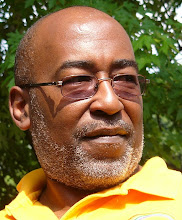
Alfred Sangster has filed an affidavit in defence of the PM and AG in the litigation brought against them by his erstwhile PSC colleagues.
The affidavit can be found at: http://www.scribd.com/doc/8526690/Alfred-Sangsters-Affidavit.
Sangster's affidavit demonstrates a comprehensive surrender of whatever was left of his backbone and indeed another part of his anatomy that is associated with manhood.
Sangster's affidavit largely elaborates on his earlier public excoriation of his PSC colleagues. Some of the salient elements of his affidavit are as follows:
1. Sangster supported Vasciannie's appointment as SG until his 'discovery' of Vasciannie's 'dead cat' comment. According to Sangster, he was unaware of this comment until he read about it in a Mark Wignall column published in December 2007.
2. After a round of meetings with the PM/GG, he claims that he prepared a letter of resignation dated November 26, 2007 (before seeing the dead cat comment, but was persuaded not to proffer it because of the implications of his "JLP" name. At paragraph 14, Sangster states that he supported Vasciannie's nomination until he discovered the dead cat comment. At a meeting of the PSC on November 26, 2007, Sangster confirms that he was part of a unanimous recommendation to affirm Vasciannie's nomination as SG.
3. Sangster claims that he tried to persuade his colleagues to reconsider Vasciannie's nomination in light of the dead cat comment, but without success. Incredibly, Sangster claims that Vasciannie had an obligation to disclose the dead cat comment, despite wide publication of the comment in 2002 in Vasciannie's own column in the Gleaner.
4. Sangster accuses Pauline Findlay of being "high-handed" in refusing to reconsider the nomination of Stephen Vasciannie (in light of the objections of the PM). For Sangster, Pauline Findlay's position established the PSC's position of "arrogance and non-retreat". Sangster states that Pauline Findlay's 'high-handedness' occurred at a meeting of the PSC on October 31, 2007 (following a meeting on the same day between the PSC and the PM).
5. Sangster further accuses the PSC of improper conduct in failing to reinstate Lackston Robinson in his position at the AG's Chambers. Sangster was not a member of the PSC when the Supreme Court quashed Robinson's retirement in the public interest. Sangster claims that the PSC's attempt to assign Robinson to the Tax Administration Department was "an attempt to circumvent the judgment of the Court".
6. Ultimately, Sangster accuses the PSC of misbehaviour for (a) their "arrogant position" to the Prime Minister "and in the decisions they made"; (b) their conduct with respect to Lackston Robinson. Sangster concludes that "it was unthinkable for me, and still is to become embroiled in a legal suit against the Prime Minister and tangentially the Governor General, which is in my opinion not in the public interest."
I so hope that the Claimants will ask for Sangster to be produced for cross-examination. It is quite obvious that Sangster was cowed by the PM's displeasure, forgetting (?) that the PSC doesn't exist to rubber stamp the directives of the executive arm of government. This is clearly revealed by Sangster's characterization of the PSC as arrogant for refusing to bow to the PM.
Sangster shamelessly parades the 'dead cat' comment as justification for reconsidering Vasciannie's nomination, despite the fact that he had endorsed Vasciannie even after his supposed letter of resignation of November 26, 2007. Sangster's discovery of the dead cat comment can after the meeting of November 26, 2007. What then was the reason for threatening to resign at a time when he was unaware of the comment, and indeed had already endorsed Vasciannie? Sangster himself says that he only changed his mind about Vasciannie after the dead cat comment (paragraph 14). Of what relevance was a five year old comment to Vasciannie's qualifications for the job of SG? Is Sangster saying that any criticism of politicians disqualifies competent professionals from holding positions in the public service??
If Sangster was so uncomfortable generally about the behaviour of the PSC, why didn't he simply resign without more?
The PSC's role in the Robinson litigation is one of the grounds of "misbehaviour" cited by the PM in firing the PSC members, including Sangster. As a matter of pride, one might have thought that Sangster would object to being indicted for misbehaviour, together with his former colleagues. Instead, Sangster ends up condemning his colleagues (and himself by extension), by obsequiously parrotting the PM's indictment of the PSC. Apart from this, Sangster wasn't part of the PSC at the time of the adverse judicial review against the PSC. On what moral or legal authority does Sangster pontificate on the implications of the ruling or the PSC's decision to transfer Robinson elsewhere?
In my view, the only PSC member guilty of 'misbehaviour' is Sangster himself. As a member of the PSC, he was obliged to exercise constitutional authority independently of the views or preferences of the Prime Minister or his surrogates. He was likewise obliged to exercise his authority unfettered by irrelevant, and indeed irrational considerations such as Vasciannie's so-called 'dead cat comment'. Sangster has revealed himself to be little more than a cowardly mouthpiece for the JLP government. In plain terms, Sangster is a damn disgrace, an embarrassment to the office that he held, and indeed to the national honour he holds.
Saturday, November 29, 2008
Abject Alfred


Saturday, May 31, 2008
Coke Affidavit in response to Golding & Lightbourne
Sorry about the long interval since I last posted. Here's the affidavit of Daisy Coke in response to Bruce Golding and Dorothy Lightbourne.
http://www.scribd.com/doc/3188342/affidavit-further2-coke-daisy
Tuesday, March 25, 2008
Affidavits of Bruce Golding and Dorothy Lightbourne
Bruce Golding and Dorothy Lighbourne have filed affidavits in response to the application for judicial review initiated by Daisy Coke, et al. The affidavits are dated March 12, 2008. I have posted the affidavits under "PSC litigation documents" (see sidebar).
Bruce Golding's affidavit can also be found at http://www.scribd.com/doc/2361819/Affidavit-of-Bruce-Golding.
Dorothy Lightbourne's affidavit can also be found at http://www.scribd.com/doc/2361817/Affidavit-of-Dorothy-Lightbourne.
Both affidavits make for interesting, but disturbing reading. Neither the AG nor the PM appear to have even the most rudimentary grasp of the rule of law or the respective roles of the political directorate and the Public Service Commission. The constitutional reform champ and his AG both operate on the assumption that the PSC operates to follow their dictates instead of the constitution of Jamaica.
The Attorney General denies that she ever said to Daisy Coke that the only person she was prepared to work with was Douglas Leys. However, this is exactly what the AG told me when I spoke with her by phone on or about October 31, 2008. Both affidavits have focused a lot of attention on the PSC's apparent bias against Douglas Leys. Assuming that the PSC's process was vitiated by bias or some other defiency, wouldn't this be unfair to all of the candidates, and not just Douglas Leys? Surely, it would not be fair to either Stephen Vasciannie or Patrick Foster if their candidacies were evaluated and decided in a process that was substantively or procedurally flawed. However, it is clear that neither the AG nor the PM were concerned about the principle of fairness per se, as opposed to strong-arming the PSC into withdrawing its selection of Stephen Vasciannie in favour of Douglas Leys. It is quite clear, from the tenor of the affidavits, that had the PSC simply acceded to the AG's wishes, the PSC would not have been fired for 'misbehaviour'.
The AG's affidavit repeats her public objection to Stephen Vasciannie on the basis of his supposed lack of litigation experience. It seems to me that if litigation experience was the premier qualification for the job of Solicitor General, then surely Patrick Foster would've been a better choice than Douglas. While both are experienced litigators, Patrick has litigation experience at both the public and private bars, while Douglas; experience has been at the public bar only. The AG still has not grasped the role and function of the Solicitor General. As I have said before, the Solicitor General's primary role is that of an adviser/administrator, not that of a litigator. Litigation is simply one of five areas in the AG's Chambers, and certainly is not the dominant area of activity in the Chambers. Quite fatuously, the AG dismissed concerns expressed by the PSC about Douglas' interpersonal skills, stating that she wasn't interested in his "social skills", but "required a functioning Solicitor General". In which galaxy does the the AG think that interpersonal skills are unimportant in the management of lawyers?? Given her own record of alienating members of her Chambers, it is quite clear what little premium she places on getting along with her colleagues.
One of the more bizarre elements of the AG's affidavit is that this is the first time that I have ever heard a public functionary invoke the doctrine of legitimate expectation in response to a claim of abuse of power!! Legitimate expectation is a well-known doctrine in administrative law. It was this doctrine that Lackston Robinson invoked when he challenged his non-appointment as Deputy Solicitor General after acting in the post for a year. Essentially he claimed that he had a legitimate expectation (as opposed to a substantive right) of being appointed to the post, having acted. This claim was eventually dismissed. In short, legitimate expectation is only invoked by persons who are challenging an adverse decision by a public functionary. I have never seen it invoked as a defence by a public functionary to a claim of abuse of power.
In administrative law, public functionaries/bodies have a duty to be fair in making decisions, particularly where those decisions may adversely affect the rights or interests of others. Where a public authority has given a promise or representation to a person that a particular practice (or pattern of decision-making) will continue, administrative law recognizes that in those circumstances, a legitimate expectation may reasonably arise on the part of an interested or affected party that the practice or pattern of the public authority will continue until and unless the public authority first signals otherwise. The concept of legitimate expectation connotes the idea of inculcating an expectation in the citizen by a public authoriy that a rule, policy, practice,or scheme will continue. In this context, the citizen has a legitimate expectation that he/she will enjoy benefits of such rule, policy, or scheme, and will not be deprived thereof unless there is some overriding public interest,or that the public authority has signalled an end to a relevant rule, policy, practice, or scheme. The idea is that a person may be unfairly prejudiced by an adverse decision by a public authority when the public authority has previously represented (expressly or impliedly) that it would do otherwise. However, as indicated before, the doctrine of legitimate expectation is may only be invoked by ordinary citizens who may consider that they have been treated unfairly by a public authority. It does not apply to public functionaries like the AG and the PM, and certainly not as a defence to their own administrative malfeasance.
In this case, both the AG and the PM have relied on the legitimate expectation that the PSC would not have selected a candidate as SG without first consulting with them. The AG bases this on some assurance allegedly offered by Daisy Coke that "I could not recommend someone with whom you could not work."
I simply do not buy the AG's story that Daisy Coke gave her any such assurances. Firstly, as an experienced member of the PSC, I can hardly see Daisy Coke essentially agreeing to surrender the PSC's discretion to the AG. Secondly, Daisy Coke would hardly have been in a position to bind the PSC with respect to such an assurance, even if it had been given. Thirdly, as a matter of law, the PSC was never obliged to consult the AG or the PM; as such,any consultation could only reasonably be construed as a courtesy, but certainly not a command. Such assurance, even if had been given, could never be binding as a matter of law. This is rudimentary adminstrative law. Why is the AG pretending not to know this? Then again, maybe she doesn't!
This nonsense argument betrays a pathetic effort by the AG and PM to sanctify their outrageous assault on the rule of law.
Both the AG and the PM treat this supposed failure of the PSC to consult with them, as if it were some fatal breach of the law. Ironically, they assail the perfectly lawful participation of John Leiba and Carlton Davies in the deliberations of the PSC. I can see the lawyers for the PSC having a field day cross-examining the AG and PM on this issue! I wonder if it has occurred to either the AG or the PM, that had the PSC acceded to their wishes, that the PSC would then be in palpable breach of the law.
I find it mind-blowing that Bruce Golding considers his meeting with the PSC on Oct. 31 as the equivalent of a hearing!! He compounds this fatuity by claiming that he subsequently 'discovered' that Pauline Findlay previously had a relationship with Michael Hylton, which supposedly compounded the "appearance of bias". Even if he could pretend that the meeting on Oct 31 was a "hearing", where was the hearing on this issue?? For there to be even a pretence of a hearing, he would've been obliged to at least call on Pauline Findlay for her side of the story, which he clearly didn't. It's incredible that Bruce Golding has the audacity to claim that all the Commissioners had ample opportunity to respond, when at no time did he formally request any of them to show cause why they shouldn't be removed for misbehaviour, much less provide particulars of the alleged misbehaviour.
The PM claims in his affidavit that Alfred Sangster offered to resign during the Oct 31 meeting with the PSC. If this were so, why didn't Sangster say this when he publicly distanced himself from his erstwhile colleagues? I have little doubt that this so-called offer of resignation is nothing more than a figment of the PM's imagination. Interestingly, the PM has not explained in his affidavit why he fired Sangster, when Sangster wasn't part of the panel that interviewed the candidates for Solicitor General, nor was he a member of the PSC when Justice Jones ruled against the PSC on the retirement of Lackston Robinson in the public interest. Again, I can see lots of cross-examination material for the lawyers representing Daisy Coke, et al.
Dorothy Lightbourne states in her affidavit (paragraph 3) that "Professor Stephen Vasciannie was a part time officer contracted to the former
Attorney General, the Hon. A.J. Nicholson, to deal with international matters and
was later made a supernumery (sic)".
This is complete crock. AJ did not, and could not have contracted Stephen Vasciannie.
Stephen was recruited as a Consultant in the Attorney General's Chambers at the level of Deputy Solicitor General, with primary responsibility as Head of the International Division of the Chambers. Stephen reported to the Solicitor General (Mike Hylton) and not directly to AJ. The AG is clearly trying to create the impression that Stephen was a political appointee, working directly for AJ, which is not true.
After a year as "Consultant", both Stephen's title was changed to "Deputy Solicitor General"; but with no change in functions. In this context, Lightbourne's reference to supernumerary is also misleading because it does not say supernumerary at what level; the level was that of Deputy Solicitor General. In effect, Stephen worked as a Deputy Solicitor General (with that title) for four years. The AG appears to have deliberately obscured or distorted the facts on this issue. Obviously, Stephen's employment record with the AG's Chambers would not only be documented, but the AG herself would have direct access to this record.
One can only infer that the AG fully intended to smear Stephen Vasciannie as a partisan functionary operating at the behest of the previous PNP Attorney General, and by extension, the PNP iself. This is consonant with her unsubstantiated belief that under the PNP regime, the AG's Chambers had been taken over or had become dominated by 'PNP' lawyers. While the AG claims that her principal objection to Stephen Vasciannie's selection as SG was on account of his purported lack of litigation experience, her deliberate mischaracterization of his employment status strongly implies that she simply saw him as a PNP operative who needed to be eliminated. As I have said before in other commentaries, there is little doubt as to the partisan agenda of the AG in her approach to the AG's Chambers. This most recent evidence of this is the obstruction of Nicole Foster-Pusey's appointment as acting Deputy Solicitor General.
The affidavits of the PM and AG have a number of exhibits, including the correspondence between the PM and the Leader of the Opposition that preceded the formal dismissal of the PSC members by the Governor General. What is obvious from the correspondence is that the PM had not intention of addressing, much less taking into account any of the legitimate concerns expressed by the Opposition Leader. I remain amazed that the PM, with his reservoir of political experience has handled this issue so ineptly, with no vision other than short term partisan gain. The vision for Jamaica that he so eloquently articulated on September 11, 2007, continues to be betrayed.
Sunday, March 9, 2008
Affidavit of Portia Simpson Miller
Mrs. Simpson Miller's litigation is perhaps academic now, but here's the affidavit that she filed.
Sunday, February 10, 2008
Commentary on litigation by dismissed PSC members
Somewhat belatedly, I am offering a few comments on the litigation initiated by the dismissed PSC members, with particular reference to Daisy Coke's affidavit. This is the lead affidavit in support of the application for judicial review of the Prime Minister recommendation to dismiss the PSC en bloc.
I will state upfront that I believe the affidavit evidence proffered by Daisy Coke ("DC"). It will be interesting to see what the PM says in response. I simply cannot see the PM being able to craft a credible response to DC's affidavit.
One of the intriguing revelations of DC's affidavit is the PM's expression of confidence in the PSC when he first met with them on September 26, 2007. He was fully briefed on the status of the PSC's work, including arrangements being made to interview applicants for the post of Solicitor General during the first week of October 2007. It is quite clear from the affidavit that the PM did not express any preference for a particular candidate. However, following his Attorney General's objection to Stephen Vasciannie's selection, the PM later summoned the PSC to a meeting on October 31, 2007 to rage at them for attempting "to shove Dr. Vasciannie down his throat and to mash up the Government”.
The PM clearly made no attempt to give the PSC members a fair hearing before dismissing them for so-called "misbehaviour". The PSC members first learned of the particulars of this "misbehaviour" when the Gleaner published excerpts of a letter by the PM to the Leader of the Opposition dated November 16, 2007. In a meeting with DC on November 16, 2007, the PM did not provide particulars of misbehaviour; instead he told DC that he had already issued a letter “to terminate the PSC en bloc”. It was during this conversation that the PM asked DC whether the PSC's decision to recommend Stephen Vasciannie had been vitiated by (a) having John Leiba and Carlton Davis on the interviewing panel; and (b) the non-recusal of Pauline Findlay, given that she and Michael Hylton have a child together.
Is the PM kidding? Didn't someone advise him that the PSC is authorized by law to have non-Commissioners assist in the processing of applicants? Why would he throw his own Cabinet Secretary 'under the bus', so to speak? Wouldn't the Cabinet Secretary not have briefed him beforehand of his role and function with respect to the PSC??
With respect to Pauline Findlay, I didn't think that Prime Minister Golding would have stooped so low to raise her relationship with Michael Hylton. No surprisingly, DC's response was "I was so astonished by this statement from the Hon. Prime Minister which I regarded as entirely improper, that I was unable to utter a response". Interestingly, Pauline Findlay states in her affidavit that she recused herself when the PSC was considering Michael Hylton for the position of Solicitor General back in 2000. This was certainly the proper thing to do at the time. There was no basis for her to do this again in considering applicants that did not include Michael Hylton. The PM has charged that she should have recused herself because she was aware of a 'less than harmonious relationship' between Hylton and Leys. What rot!
According to DC's affidavit, Dorothy Lightbourne, the Attorney General called her on October 18, 2007, to object to Stephen Vasciannie's selection as SG. As has been well publicised, the AG objected to Stephen Vasciannie because of a purported lack of litigation experience. The AG told DC that her preference was Douglas Leys. As far as I am concerned, the AG trespassed on the province of the PSC by expressly objecting to the PSC's choice. Nevertheless, DC bent over backwards to negotiate with the AG, even meeting with the AG at her Chambers on October 24, 2007. The AG refused to budge from her position, despite DC pointing out to her that the PSC had had the input of the then incumbent SG on the qualifications for the job. I really have to ask, what does Dorothy Lightbourne know about running the Attorney General's Chambers that would be superior to Michael Hylton's knowledge and experience? Dorothy Lightbourne has spent most, if not all of her professional life as a sole practitioner, with no track record of managing lawyers, at all. By contrast Michael Hylton was a partner at Myers Fletcher & Gordon for more than a decade before he became Solicitor General in January 2001. It seems that Dorothy is out of depth, but doesn't know it, even less so, her Prime Minister.
Apart from violating the rule of law, the government's behaviour has been singularly vile with respect to its treatment of the PSC members. The only hope of redress lies with the Jamaican courts. Let's hope they do their job.
Sunday, February 3, 2008
PSC Court documents
I have uploaded the court documents filed by the dismissed PSC members (except for affidavit by Mike Fennell). The links to these documents are on the home page of the blog. The main affidavit by Daisy Coke is available here:
http://www.scribd.com/doc/2034515/affidavit-coke-daisy